

Key Takeaways
A week away can show you where the business still relies on your attention. Use it as a practical test, then change the systems that keep pulling you back in.
- Set clear limits on what crew leads can decide without you.
- Track job handoffs, customer follow-up, and urgent calls while you are away.
- Compare estimates, booked jobs, completed work, and job profitability.
- Stay reachable for defined emergencies without directing every routine choice.
- Debrief afterward and test the changes with another short absence.
What a week away reveals about how the business runs
A week off the job is a useful stress test, not a vacation from responsibility. It shows where work moves on its own and where someone waits for you to approve the next step. You may find that a routine call, estimate, or schedule change still needs your attention. Notice those moments without treating every delay as a failure.
Find the decisions that still bottleneck with the owner
Pay attention to the small decisions that keep coming back to you. A crew might need approval to adjust a job sequence, while the office may be unsure how to handle a customer asking to move an estimate. Write down each interruption and what information or authority was missing. That record gives you a more useful starting point than a general feeling that you need to delegate more.
See whether crew leads can keep jobs moving
A crew lead does not need to run the whole company to keep a job moving. They do need enough context to handle ordinary changes, communicate with the office, and flag issues early. Watch whether equipment questions or a change in site conditions pause the work until you respond. The goal is work that moves without you on routine matters, while safety and major scope changes still get the right attention.
Notice what customers and office staff need from you
Listen for confusion at the handoff between the customer, office, and crew. If a customer calls about an estimate, the office should know who owns the follow-up and what was promised. A reliable process for handling tree service leads makes it easier to tell an inquiry from a booked estimate or job. The same discipline helps your tree service marketing connect with real capacity instead of generating activity nobody has time to manage.
Separate a temporary problem from a recurring one
One delayed job during a week of bad weather does not prove the schedule is broken. Look for patterns across several days: the same approval waiting on you, repeated customer confusion, or a handoff that fails whenever a particular person is out. Ask what changed and whether the same issue has happened before. A recurring problem deserves a process fix; a one-off disruption may only need a note for next time.
Prepare the business for your absence
Do not make your first real test an unplanned week away during a storm or a packed schedule. Choose a period when you can set expectations, name a point person, and let customers know where routine questions should go. Preparation should make normal work easier to handle, not create a binder nobody will use. Start with a short list of decisions people make every week.

Pick a week with manageable scheduling and weather risks
Choose a week with enough room to absorb a reschedule or a job that takes longer than expected. You cannot control the forecast, but you can avoid stacking every complex removal into the same few days. Review crew capacity, pending estimates, and jobs that depend on your personal presence. If conditions change, the point of the test is to see whether the team can follow agreed rules, not to force the original plan at any cost.
Give crew leads clear authority over routine decisions
Tell leads which ordinary choices they can make without checking in. Keep the boundaries plain and tied to the work, such as schedule adjustments within the day or calling the office to update a customer about timing. A short list can help separate routine authority from matters that need escalation:
- Adjust the order of routine tasks when conditions allow.
- Contact the office about arrival times or customer updates.
- Pause work and raise safety concerns immediately.
- Seek approval before changing scope or price.
This gives leads room to act while keeping safety, scope, and pricing decisions visible. Review the limits with them before you leave so no one has to guess what you meant.
Set rules for safety issues, equipment problems, and urgent calls
Make clear that safety concerns are never something a lead should wait to report. Set a separate process for equipment failure, job-site changes, and customer emergencies, including who should be contacted first and what can wait. If the issue affects safe work, the crew should stop and follow your established safety procedures. A week away is not a reason to lower the standard or rush a decision.
Tell customers and staff how to reach the right person
Let customers know who will handle scheduling and routine questions while you are away. Give staff the same contact path so they do not have to relay every message through you. Your tree service website design and customer communication should make the next step easy to understand, but the office still needs a named person responsible for each open question. Clear routing prevents a simple request from turning into a string of missed calls.
Use the week to build tree service business owner leadership
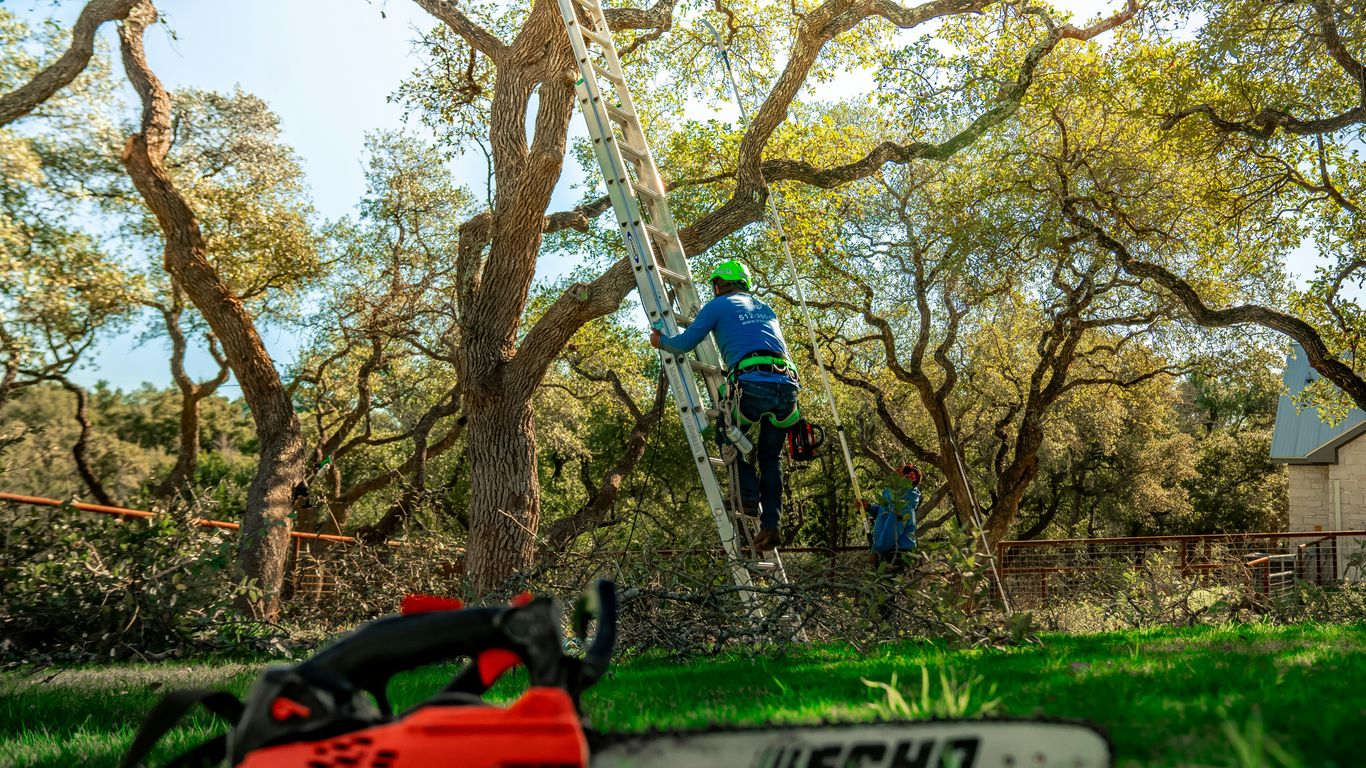
Stepping away is only useful if you let other people carry responsibility while you are gone. That means giving the team a clear result to own, then accepting that they may reach it differently than you would. You are not trying to prove that nobody needs you. You are learning where your judgment is essential and where your constant presence has become a habit.
Delegate outcomes instead of prescribing every step
Tell a lead what needs to be true when the job is complete: the work is safe, the customer has an update, and the crew has documented any change. Avoid dictating every movement from a distance. People need enough room to use their training and adapt to the site in front of them. After the week, you can discuss whether the result met your standard and where the instructions were unclear.
Let crew leads make decisions within agreed limits
A boundary only helps if you let people use it. If a lead has authority to make a routine schedule adjustment, do not reverse it simply because you would have chosen a different order. Set limits in advance for decisions involving safety, pricing, scope, and customer commitments. If you want to strengthen your own management habits, consider business fundamentals as part of the wider work of building a company that can function beyond one person’s daily presence.
Coach after the decision rather than stepping in immediately
When you hear about a decision, ask what the lead saw and why they chose that response. That conversation can show whether they understood the boundary and had the information they needed. A quick call or message does not always require you to take control. Use the moment to explain a better option if needed, then make the rule clearer for next time.
A calm review after the fact teaches more than a string of corrections while the crew is working. Keep urgent safety matters separate, but let ordinary judgment calls become learning opportunities.
Watch for skills that need more training or support
A pause in the work may point to a training gap, not a lack of effort. Notice whether a lead needs practice communicating schedule changes, handling customer concerns, or documenting a job handoff. Give feedback on a specific skill and agree on how you will check progress. Support should be practical: clear expectations, time to learn, and a chance to try again.
Check whether the numbers match the activity
Busy days can disguise a weak handoff between inquiries, estimates, and completed work. Review the numbers alongside what the crew and office experienced, so you can see where a job slowed down or dropped out. A useful marketing plan tied to booked work connects demand with crew capacity rather than treating more inquiries as the only goal. You want to understand the path from first contact to profitable completed work.
Compare estimates, booked jobs, and completed work
Keep the stages distinct when you review a week. An inquiry is not an estimate, an estimate is not a booked job, and a booked job is not completed revenue. This simple table can help you identify where the work is waiting:
| Stage | What to review | Possible handoff gap |
|---|---|---|
| Estimate requested | Contact details and response time | Nobody owns the first follow-up |
| Estimate completed | Scope and next step explained | Customer is unsure what happens next |
| Job booked | Date, crew, and job notes confirmed | Office and crew have different information |
| Work completed | Closeout and final job record | The job is done but not fully documented |
Use the pattern to ask a specific question, not to assign blame. If estimates are completed but few become booked jobs, review follow-up and the customer’s understanding of the proposal. If jobs are booked but delayed, look at scheduling and crew capacity.
Review close rate, backlog, and job profitability
Close rate and backlog tell you different things. A strong backlog may keep crews busy, but it does not prove that every job is profitable or that estimates are being followed up promptly. Review job costs and completed work with the same care you give the schedule. Digital Farmers provides reporting that ties spend to booked work, which can help a business owner distinguish marketing activity from the jobs that actually enter the pipeline.
Track missed calls and the speed of follow-up
Write down missed calls, who returned them, and how long the follow-up took. A missed call is not automatically a lost job, but an unanswered message with no owner is an avoidable gap. Digital Farmers includes missed-call text back as a supporting service, alongside CRM, email, and SMS to an existing customer database. The operational point is broader: someone on your team needs to own the response, and you need a way to see whether it happened.
Look for work that depends on one person to get scheduled or sold
If estimates only get booked when you personally call, that is a process risk worth examining. The same is true if only one person knows how to assign a crew or confirm a customer’s next step. Review the call path, estimate notes, and schedule to find where information lives only in someone’s head. Visibility topics such as tree service advertising, tree service seo, local seo for tree service, and tree service ai search may affect how customers find you, but your internal process still determines whether an opportunity gets handled well.
Stay informed without taking the work back
You should not have to choose between knowing what is happening and giving your crew leads room to lead. Agree on a simple update rhythm before you leave and define the exceptions that need an immediate call. This lets the team handle routine work without wondering whether you are watching every move. It also gives you a fair test of the process instead of a test of how quickly you answer messages.

Agree on one brief daily update
Set a time and a format for a short update. Ask for only what helps you understand the day: completed work, schedule changes, unresolved customer issues, and anything that may affect the next day. Keep it brief enough that the lead can send it without stopping work for a long report. If everything is routine, the update should say so and let the crew get on with the job.
Define which issues justify an immediate call
Agree in advance on what cannot wait. Safety incidents, an urgent customer issue, or a major change that affects the scope may require a direct call. Routine timing questions or a minor schedule adjustment can go through the office and appear in the daily update. A clear threshold protects your attention while making sure serious issues reach you quickly.
Route customer questions through the office or a designated lead
Give the office or a designated lead responsibility for customer questions during your absence. Make sure that person can see the relevant schedule and job notes, and knows when to escalate a concern. A clear owner for each conversation helps customers avoid repeating themselves. It also gives you a better picture afterward of whether the handoff worked.
Resist checking in so often that staff stop making decisions
Frequent messages can quietly cancel out the authority you gave the team. If you ask for updates after every job or reply to every routine question, staff will learn to wait for your direction. Stick to the agreed check-in unless an escalation rule applies. A little uncertainty is part of the test, and it can reveal what needs to be clarified when you return.
Turn what you learn into operating changes
The week only matters if you use what happened to improve the business. Hold a short debrief while the details are still fresh, and focus on specific decisions rather than general impressions. Some parts may have gone well because the process was clear; others may have worked only because one person improvised. Choose a small number of changes that will make the next absence easier to manage.
Debrief with crew leads and office staff
Ask crew leads and office staff what slowed them down and what helped them make decisions. Give everyone a chance to describe the same handoff from their side. Keep the discussion practical: what information was missing, who needed to know, and what would have made the next step obvious. You will get a better answer by listening before offering your own explanation.
Document recurring decisions and job handoffs
Write down decisions that come up repeatedly, such as who confirms an arrival window or who updates the schedule after a job changes. Keep the notes close to the point of use, not buried in a document nobody checks. If two people believe the other owns a task, name one owner and a backup. Clear handoffs are often more useful than adding another layer of approval.
Fix the biggest process gap before adding more rules
Choose the issue that caused the most delay or confusion and address it first. A new rule for every unusual event can make routine work harder to manage. If the problem was missing job information, improve the handoff; if it was unclear authority, set a boundary. Then see whether the change solves the problem before writing more procedures.
Schedule another short absence to test what changed
Plan another brief time away after the team has used the new process. Keep the test similar enough that you can compare what happened, while allowing ordinary changes in workload and weather. Look for fewer interruptions, clearer customer updates, and decisions made at the right level. A second test helps show whether the change became part of the operation or only worked once.
Conclusion
A week away will not make every decision easy, but it can show you which parts of the business depend too heavily on your presence. Set clear limits, pay attention to the handoffs and numbers, then fix the biggest gap you found. If you also want to review how customer acquisition fits your market and capacity, book a market review with Digital Farmers.
Frequently Asked Questions
How long should a tree service owner step away?
A week is long enough to expose recurring handoff and decision issues without making the test unnecessarily broad. Choose a period when your schedule and weather risks are manageable.
Should I be completely unreachable during the week?
No. Set clear rules for safety incidents and other urgent matters, then agree on a routine update. The goal is to avoid handling ordinary decisions from a distance.
What decisions should crew leads be allowed to make?
Give them authority over routine choices that fit their training and agreed limits. Keep safety concerns, major scope changes, and pricing decisions on a clear escalation path.
What should go in a daily update?
Keep it brief. Cover completed work, schedule changes, unresolved customer issues, and anything likely to affect the next workday.
How can I tell whether a problem is recurring?
Record what happened, what information was missing, and whether the same delay has occurred before. Repeated patterns usually call for a process or training change.
Which numbers should I review after the week?
Compare estimates, booked jobs, completed work, close rate, backlog, and job profitability. Include missed calls and follow-up time so you can see where customer handoffs need attention.
What if the business struggles while I am away?
Treat the week as a test, not a pass-or-fail judgment. Identify the specific bottleneck, provide the needed training or authority, and test the change during another short absence.