








Why Tree Service Companies Need Specialized SEO
Tree service SEO is not the same as generic local SEO.
A tree company does not need traffic from everywhere. It needs homeowners inside a profitable service area searching for the exact work its crews can perform, including tree removal, emergency tree service, tree trimming, stump grinding, tree health assessments, crane-assisted removal and storm damage cleanup.
That changes how the website needs to be structured.
At Digital Farmers, we do not start a tree service SEO campaign by publishing random articles and waiting for Google to figure out what the company does.
We build the website around the geography and services the company actually wants to dominate.
That means creating a clear relationship between:
- Your primary service area
- Your core tree services
- The surrounding cities you want to rank in
- High-intent “near me” searches
- Google Business Profile visibility
- Informational content homeowners search before hiring
- Local authority and backlinks
The goal is not to rank for a handful of vanity keywords.
The goal is to build enough geographic and topical relevance that Google understands exactly what your company does, where it does it and which searches your website deserves to appear for.
How Digital Farmers’ Tree Service SEO Process Works
Our SEO strategy starts with website architecture.
Instead of treating every keyword as an isolated target, we create clusters around your services and service areas.
If your tree company is based in Libby, Montana, for example, the structure may begin with a primary page targeting Tree Service in Libby, MT.
That page is then supported by individual service pages such as:
- Tree Removal in Libby, MT
- Emergency Tree Service in Libby, MT
- Tree Trimming in Libby, MT
- Stump Grinding in Libby, MT
- Tree Health Assessment in Libby, MT
- Land Clearing in Libby, MT
When we expand into another city, we build a new local cluster around that market instead of expecting one generic service page to rank across an entire state.
Step 1: Build Around the Primary Market
The homepage establishes the company’s primary location, main services and overall entity.
Core service pages reinforce the relationship between the business, the service and the main geographic market.
This gives us a strong foundation before expanding outward.
Step 2: Build City-Level SEO Clusters
Each important service area gets its own local structure.
We do not simply replace one city name with another and call it local SEO.
Each city page needs enough relevance, internal linking, local context and supporting service content to become part of the larger website architecture.
This creates multiple connected signals:
- Tree service + city
- Tree removal + city
- Emergency tree service + city
- Tree trimming + city
- Other profitable services + city
As the site grows, Google sees a structured tree care website instead of a collection of disconnected landing pages.
Step 3: Publish New Content Every Week
While the service and city architecture is being built, our content team publishes at least two new pieces of content per week.
These articles target questions homeowners are actually asking.
Examples include:
- How much does tree removal cost in Libby, MT?
- How much does tree removal cost in Andover, MA?
- Who is responsible for a fallen tree?
- Do I need a permit to remove a tree?
- What should I do when a tree falls on my house?
- Can a damaged tree be saved?
- When should a tree be removed instead of trimmed?
This allows us to build commercial and informational visibility at the same time.
Step 4: Optimize What Starts Ranking
SEO does not end when a page is published.
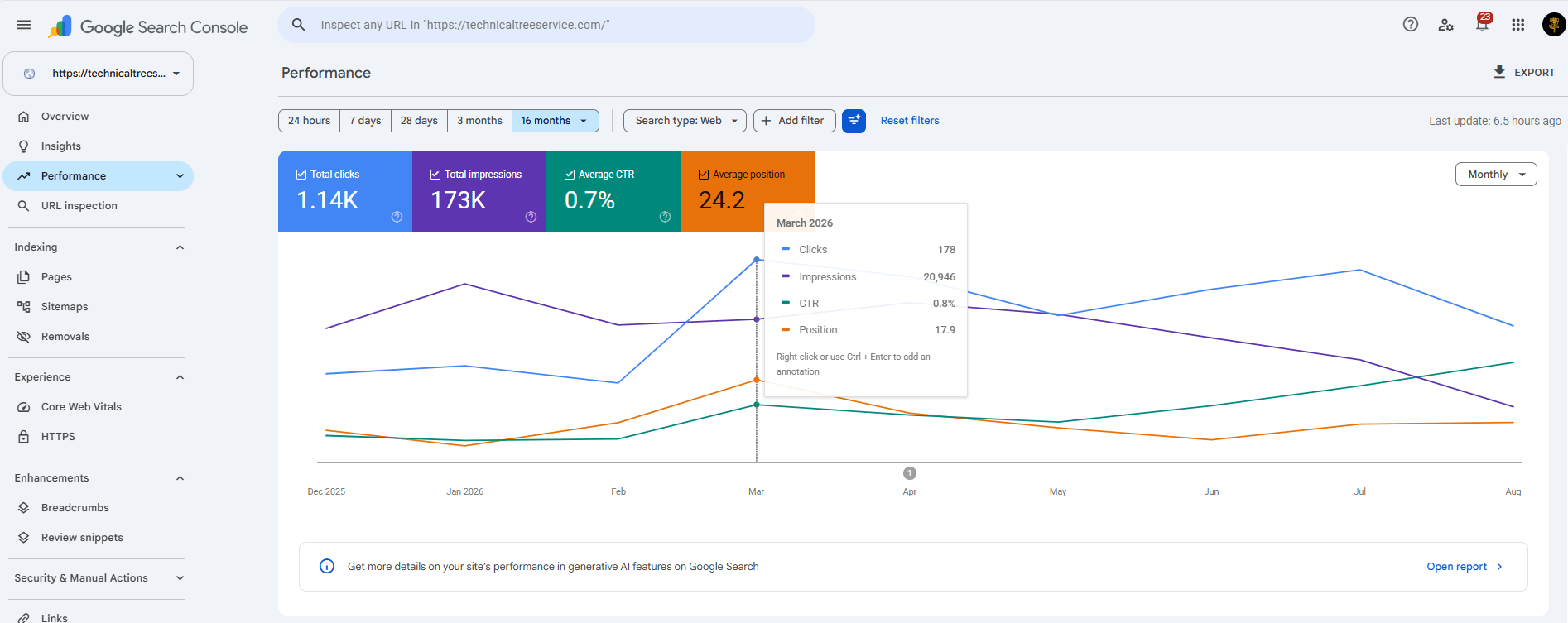
We monitor positions through SE Ranking, Google Search Console, local rank tracking and our own reporting system.
If a page begins appearing on page two, moves into the Top 10 or starts generating impressions for additional searches, we use that information to decide what to improve next.
That can mean improving content, adding internal links, strengthening topical coverage, building authority or expanding supporting pages.
What to Expect in Your First 30, 60 and 90 Days
Tree service SEO is not executed in isolated phases where nothing else happens until the previous task is finished.
Technical SEO, local pages, content, Google Business Profile work and authority building can overlap.
However, this is what the first 90 days typically look like.
Days 1-30: Build the SEO Infrastructure
The first month focuses heavily on structure.
We review your existing website, service areas, services, competitors and Google presence. Then we build or correct the architecture needed to support long-term rankings.
Work may include:
- Keyword and competitor research
- Website architecture planning
- Primary city optimization
- Core service pages
- Technical SEO audit
- Google Search Console setup or review
- Indexing analysis
- Schema markup
- Internal linking
- Google Business Profile optimization
- NAP consistency review
- Local rank tracking
- Initial blog publishing
Days 31-60: Expand Geographic and Topical Coverage
Once the foundation is established, we continue expanding the site.
Additional city pages and service clusters are published while the blog continues building topical authority.
We also start using ranking data to identify opportunities.
A page already ranking in positions 8 to 20 may deserve more attention than a completely new topic because relatively small improvements can sometimes move it into a much more valuable position.
Days 61-90: Build Authority and Scale What Is Working
By this point, Google usually gives us more information about which pages and topics it considers relevant.
We continue expanding city and service coverage, publishing new content, earning backlinks and improving pages already gaining traction.
Our objective is to turn isolated rankings into broader topical and geographic visibility.
The 5 Ranking Factors That Matter Most for Tree Service SEO
There is no single ranking factor that makes a tree company dominate search results.
Strong local SEO comes from multiple signals reinforcing each other.
1. Geographic Relevance
Google needs to understand where your business operates.
That relevance comes from your website architecture, service-area content, Google Business Profile, local citations, NAP consistency, internal links and other local signals.
2. Service Relevance
A company that wants to rank for tree removal needs enough content demonstrating expertise around tree removal.
A single sentence on the homepage is usually not enough to establish the same relevance as a dedicated service page supported by city pages, related articles and internal links.
3. Website Authority
Content alone does not determine rankings.
Links from other websites help Google evaluate the authority and credibility of your domain.
We focus on contextual backlinks that make sense for the company, location or tree care industry instead of chasing thousands of low-quality links.
4. Technical Performance
A strong content strategy can be limited by technical problems.
We monitor issues involving indexing, crawlability, canonical tags, redirects, duplicate pages, Core Web Vitals, mobile usability, structured data and site architecture.
Google uses mobile-first indexing, which means the mobile version of your website plays a critical role in how the site is understood and indexed.
5. Real Experience and Trust
Tree care involves expensive property, dangerous equipment and potentially hazardous work.
Google and homeowners both benefit from clear trust signals.
Real project photos, reviews, business information, service history, professional credentials, author information and original expertise strengthen E-E-A-T signals: Experience, Expertise, Authoritativeness and Trust.
How We Build Content That Ranks for Tree Removal, Emergency Calls and “Near Me” Searches
Different searches require different types of pages.
Someone searching “tree removal near me” is probably much closer to hiring a contractor than someone searching “why is my tree losing leaves?”
Both searches matter, but they should not be targeted with the same page.
Commercial Service Keywords
These searches indicate that someone is actively looking for a company.
Examples include:
- tree service near me
- tree removal near me
- emergency tree removal near me
- tree trimming near me
- stump grinding near me
- arborist near me
- tree service with crane near me
These terms are usually addressed through the homepage, service pages, city pages and Google Business Profile strategy.
Local Commercial Keywords
Adding the city creates another important layer of intent.
Examples include:
- tree service Libby MT
- tree removal Goffstown NH
- tree service Cambridge MA
- tree removal Andover MA
This is where our city and service cluster structure becomes especially valuable.
Emergency Tree Removal Keywords
Emergency searches deserve specific treatment because speed matters.
Storm damage SEO may target searches such as:
- emergency tree service near me
- emergency tree removal near me
- fallen tree removal
- storm damage tree service
- tree fell on house
- 24 hour emergency tree service
The content needs to make it clear that the company actually offers the service, where it responds and how the homeowner can contact the team quickly.
Informational Content
Informational searches let us build authority before the homeowner is ready to request an estimate.
Cost guides, permit information, storm preparation, pruning questions and tree health articles all strengthen the larger topical structure of the site.
Publishing at least two pieces per week gives us enough volume to continuously expand that footprint.
Link Building for Tree Services: How We Build Authority
Backlinks remain an important part of competitive SEO.
But more links do not automatically mean better SEO.
We would rather earn one relevant contextual backlink than dozens of links from websites that have no connection to your market, location or industry.
Our baseline target is at least one strong contextual backlink per month, plus local citation building when the business needs it.
Local Backlinks
We look for opportunities tied to the communities our clients serve.
That can include:
- Local publications
- Community organizations
- Local business websites
- Historical organizations
- Local event websites
- Relevant sponsorship opportunities
- Industry relationships
- Local resource pages
Context Matters
A backlink becomes more valuable when it appears naturally inside relevant content.
A Massachusetts publication discussing storm-damaged trees and citing a Massachusetts tree company is more useful than an unrelated global directory containing thousands of businesses.
We Do Not Build SEO Around Spam
Our strategy is not based on purchasing hundreds of random links, automated comments or unrelated directory listings.
Citations still have a role in local SEO, especially for NAP consistency and entity validation, but citations and editorial backlinks serve different purposes.
Google Business Profile Optimization for Tree Care Companies
Your website and Google Business Profile should reinforce each other.
For many local searches, the Google Map Pack appears before traditional organic results.
That means a tree service SEO campaign cannot treat Google Business Profile as a separate project.
Our GBP work can include:
- Business information review
- Primary and secondary category optimization
- Service optimization
- Service-area review
- NAP consistency
- Photo strategy
- Review strategy
- Review responses
- Local citations
- Competitor analysis
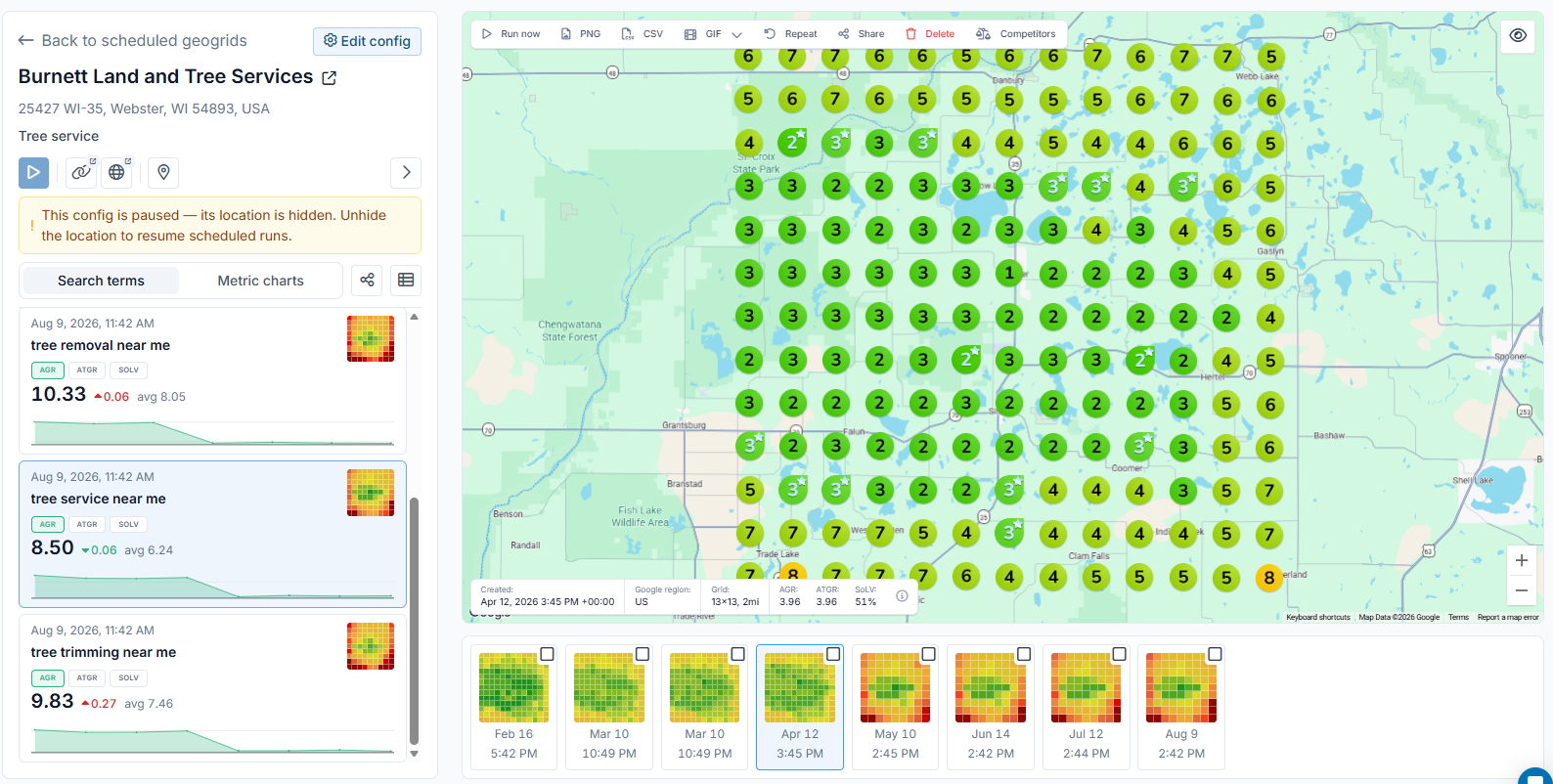
- GeoGrid tracking
- Verification support
- Reinstatement support when applicable
We use LocalBrandManager and local rank tracking to see how visibility changes across the actual service area.
One ranking checked from one computer does not tell the whole story.
A company can rank #1 a few miles from its office and disappear fifteen miles away. GeoGrid data shows us where that visibility begins to weaken.
Case Study: Mountain Tree Service Reached Page One With a Brand-New Domain in 7 Days

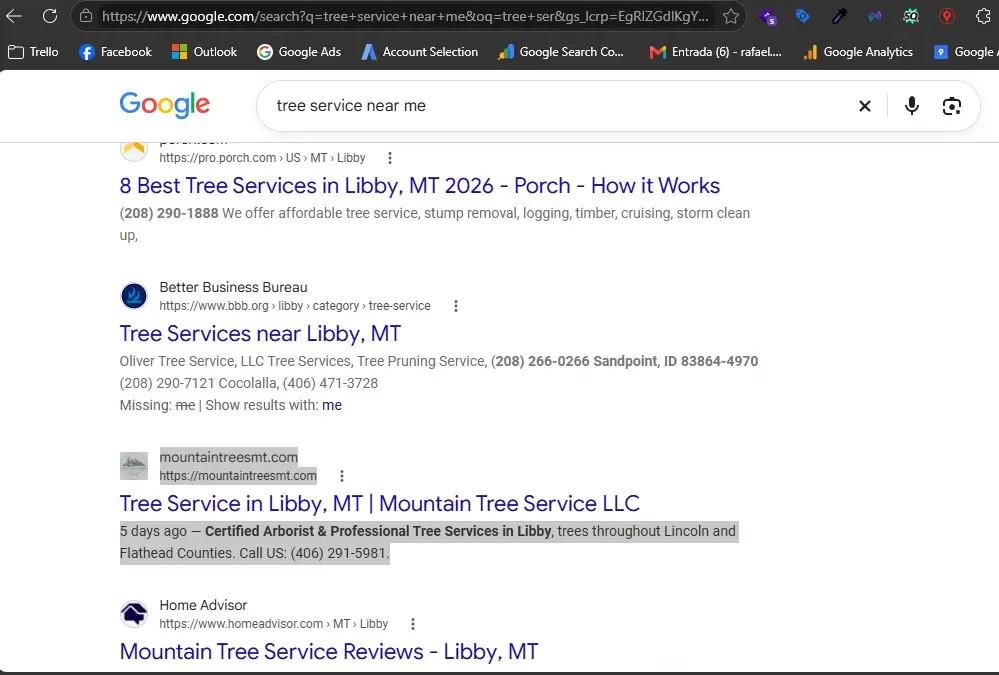
Mountain Tree Service is one of our clearest examples of why site architecture matters.
When the project launched, the company was starting with a completely new domain.
The Google Business Profile had not yet been approved, which meant we could not depend on Google Maps to create the initial visibility.
We structured the website around the company’s primary market in Libby, Montana and connected the core tree services directly to that local market.
Within seven days of the website going live, the new domain had already reached the first page of Google’s organic results.
During our test, Mountain Tree Service reached approximately the #5 organic position for searches around “tree service in Libby, Montana” and also appeared on page one for “tree service near me.”
That happened before the Google Business Profile was approved.
This does not mean every new domain will reach page one in seven days. Competition, market size, website history and many other factors affect rankings.
What the result demonstrates is that a new domain does not need to spend months publishing random content before Google can understand what the company does.
When architecture, service relevance, location relevance, technical SEO and content align from the beginning, Google has much clearer signals to work with.
More Tree Service SEO Results Across Different Markets
Our strategy is not based on one website or one market.
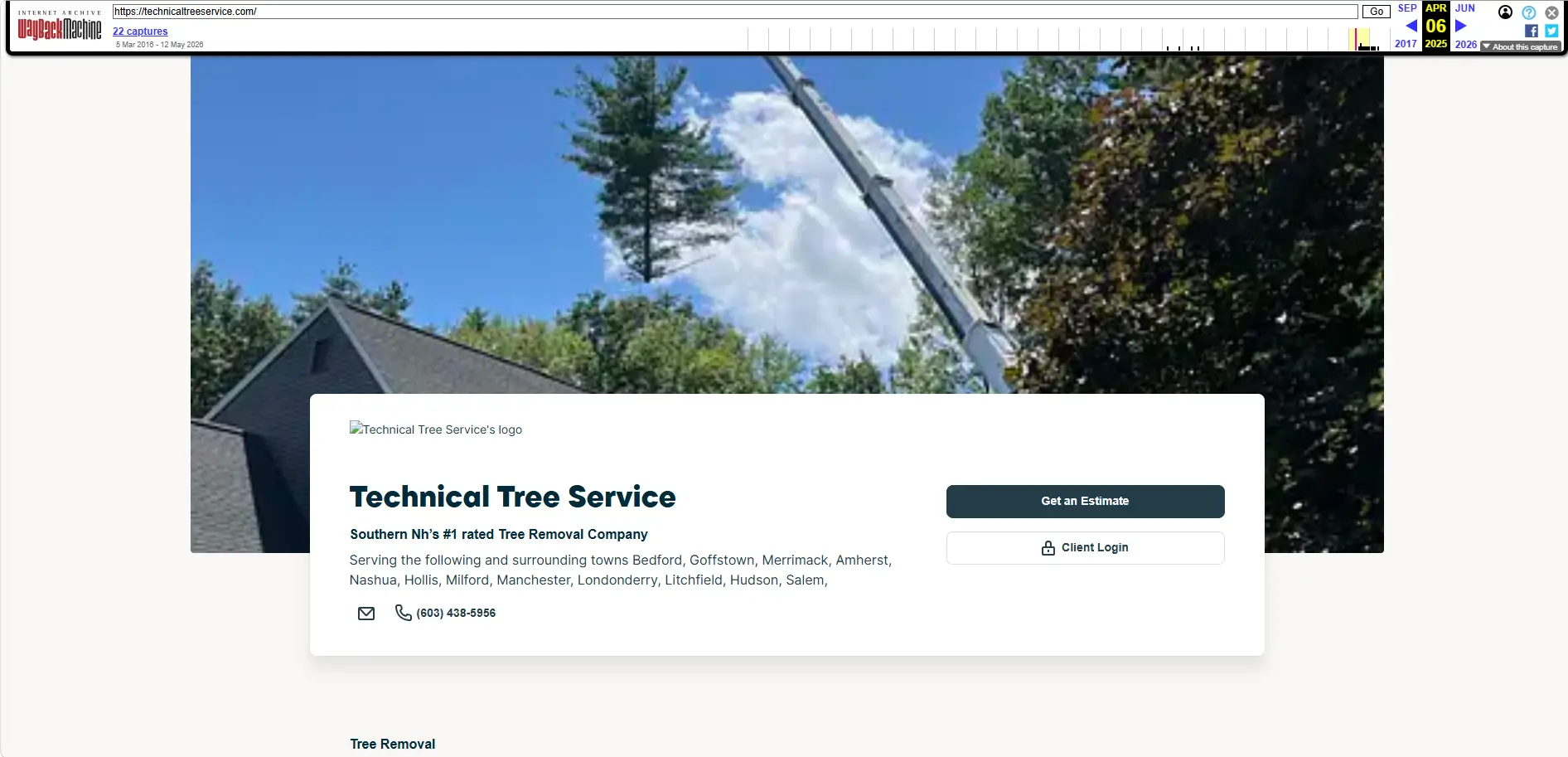
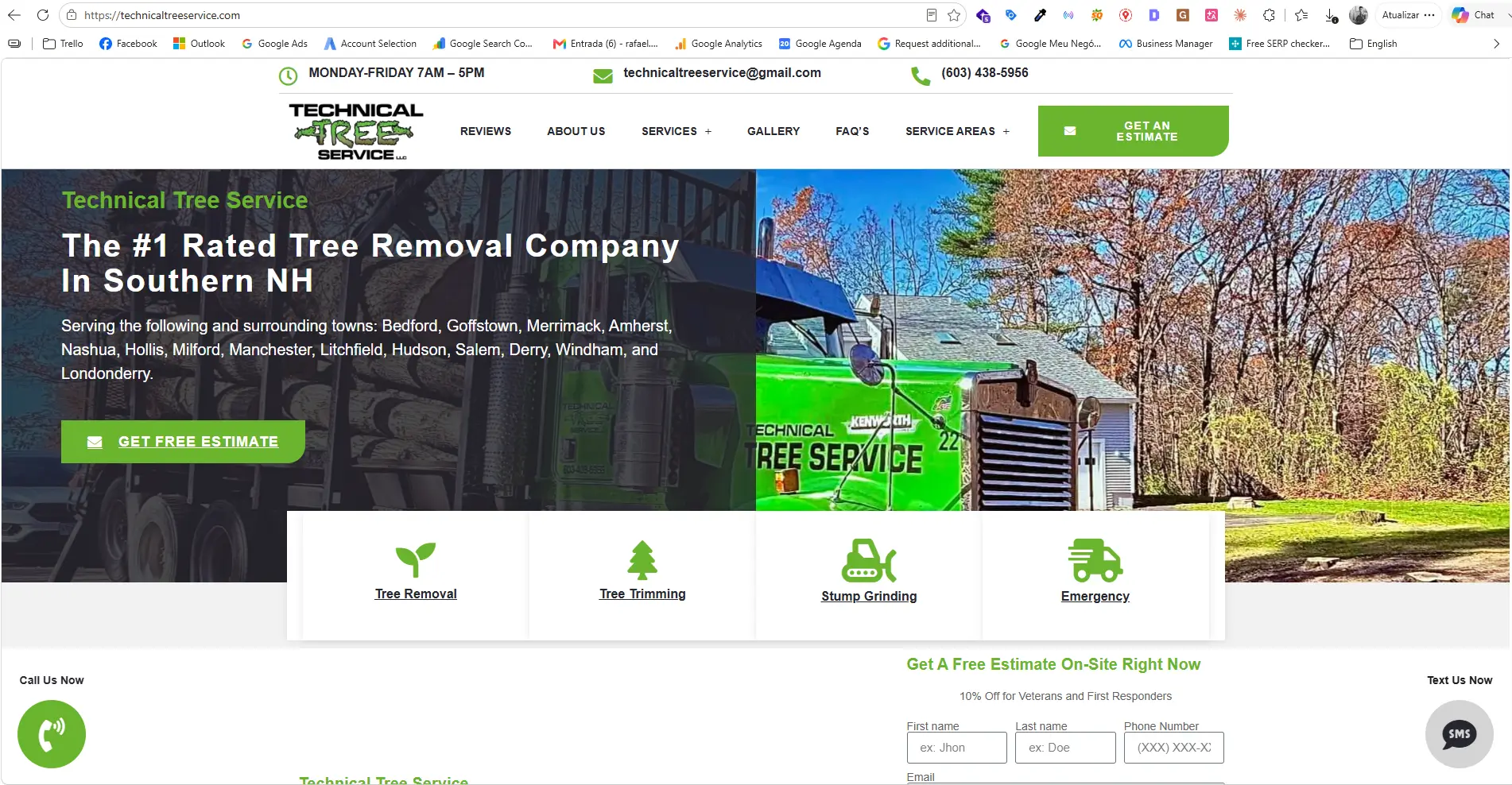
Technical Tree Service, New Hampshire
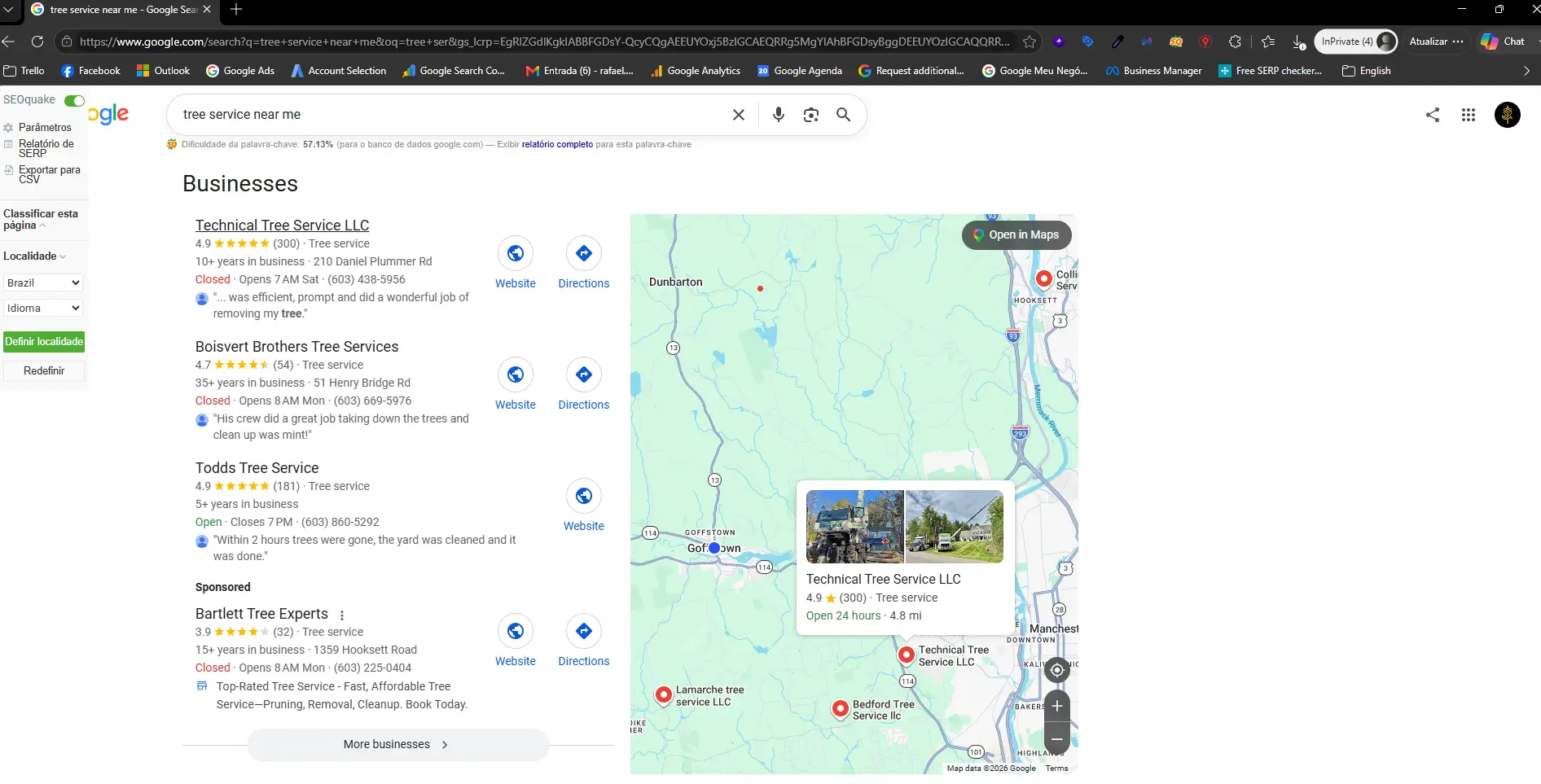
Technical Tree Service developed broad local visibility around Goffstown and surrounding New Hampshire markets.
GeoGrid tracking has shown strong rankings for high-intent searches including “tree service Goffstown NH” and “tree removal Goffstown NH.”
For “tree service Goffstown NH,” local tracking reached an average grid ranking around position 2 with visibility across the monitored area.
The company’s organic and local presence also expanded into broader searches including tree removal and tree service near me.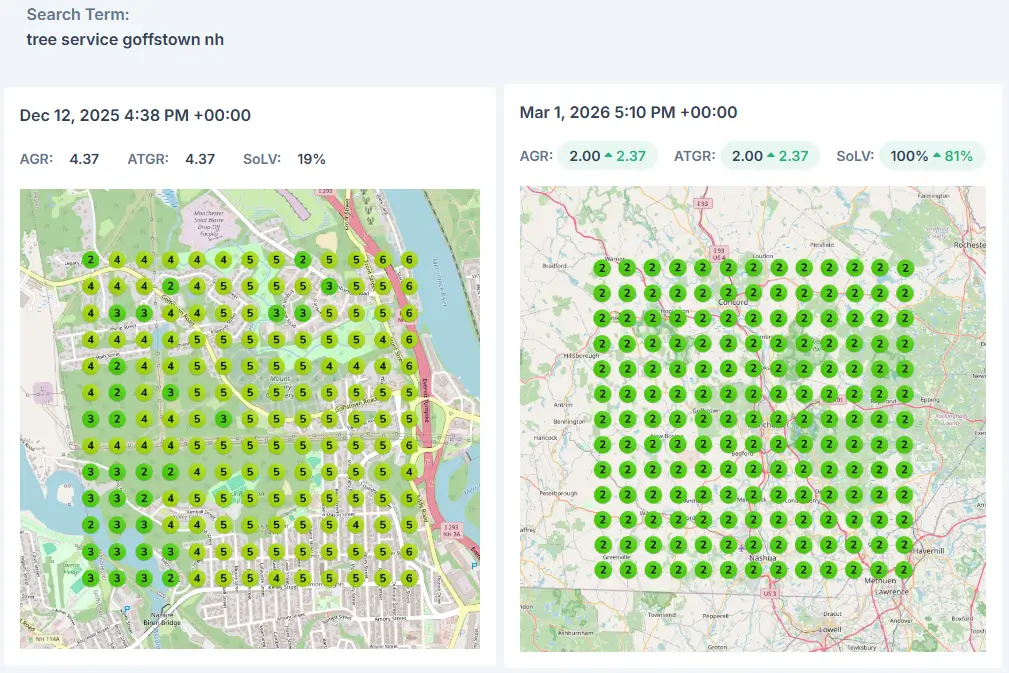
LedNew Tree Care, Massachusetts
LedNew Tree Care developed extensive Google Maps visibility across its Massachusetts service area.
GeoGrid scans for emergency tree removal show large sections of the target territory ranking in positions 1, 2 and 3.
That type of coverage is what we mean when we talk about local SEO. The objective is not one green dot next to the office. The objective is useful visibility across the places where customers actually live.
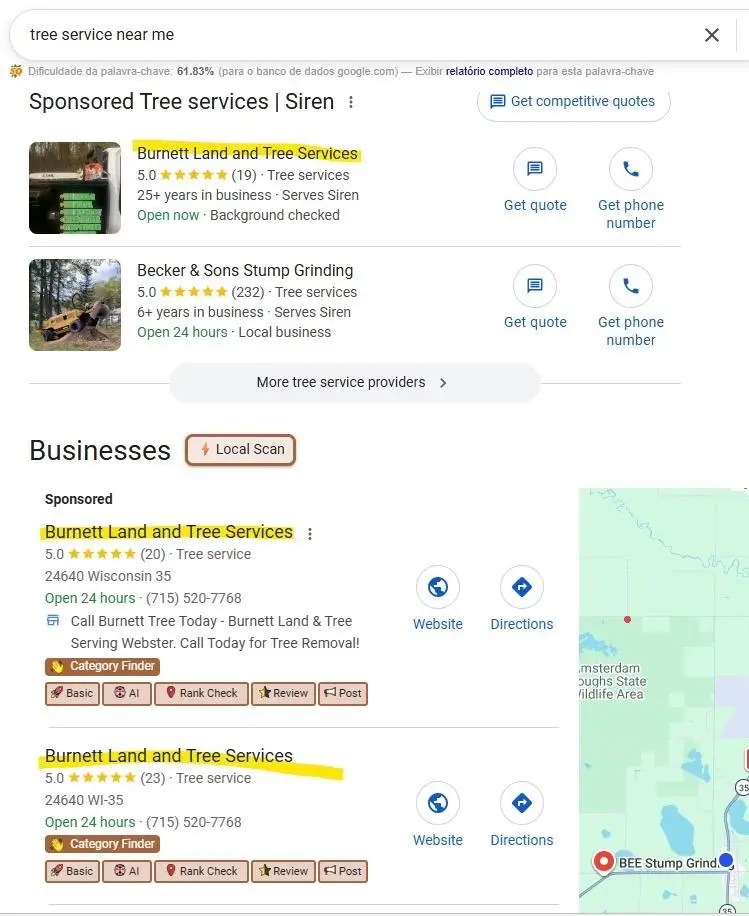
Burnett Land and Tree Services, Wisconsin
Burnett has reached top organic positions for valuable searches including tree removal and emergency tree service terms.
The site demonstrates the value of combining strong service relevance with location-specific content instead of depending on one generic homepage.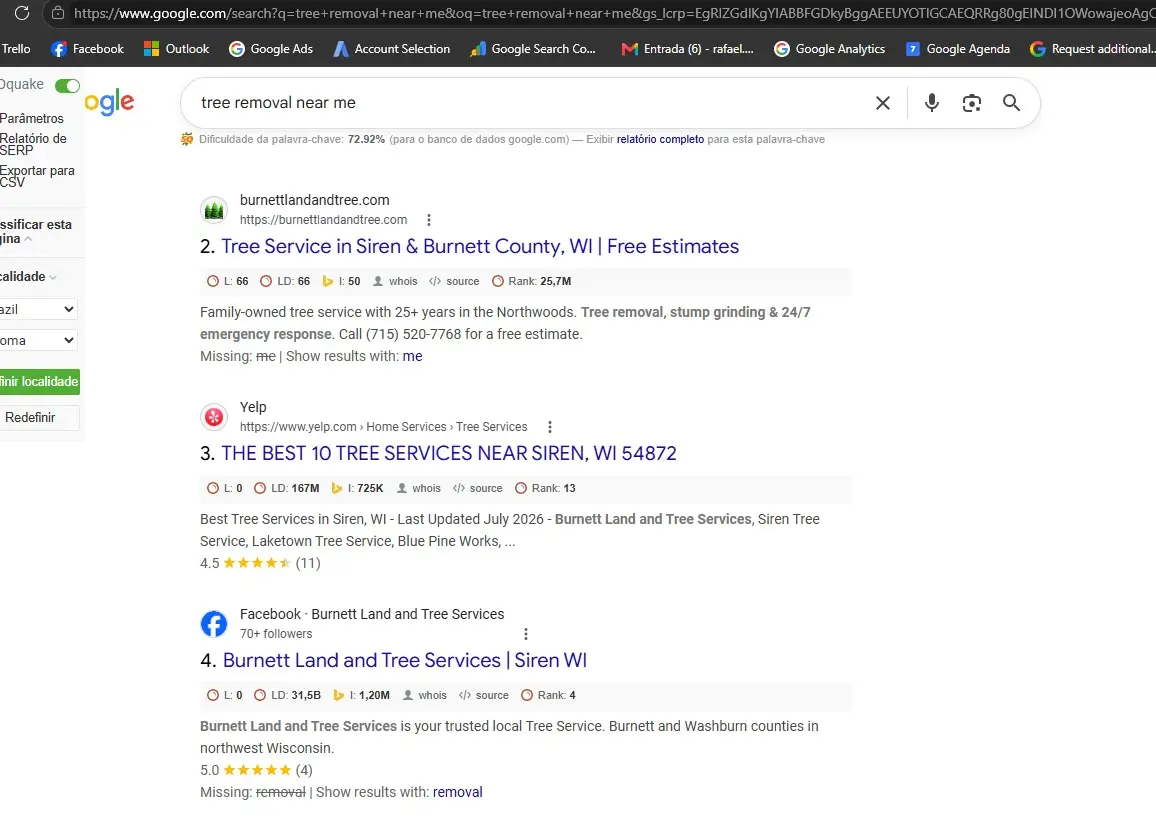
Arbor Tree Service, Massachusetts
Arbor’s website ranks across a broad range of local and service-specific searches, including tree removal, emergency tree service, crane-assisted tree removal and city-specific keywords throughout Massachusetts.
This is the long-term objective of a geographic content strategy: one domain building visibility across dozens of commercially relevant searches instead of depending on one or two keywords.
Tree Service SEO vs. Google Ads: Which One Should You Use?
SEO and Google Ads solve different problems.
Google Ads can generate visibility almost immediately after a campaign launches.
SEO builds an asset that can continue generating traffic without paying Google for every click.
Google Ads Is Faster
If you need more tree removal calls this month, waiting for every organic page to mature may not make sense.
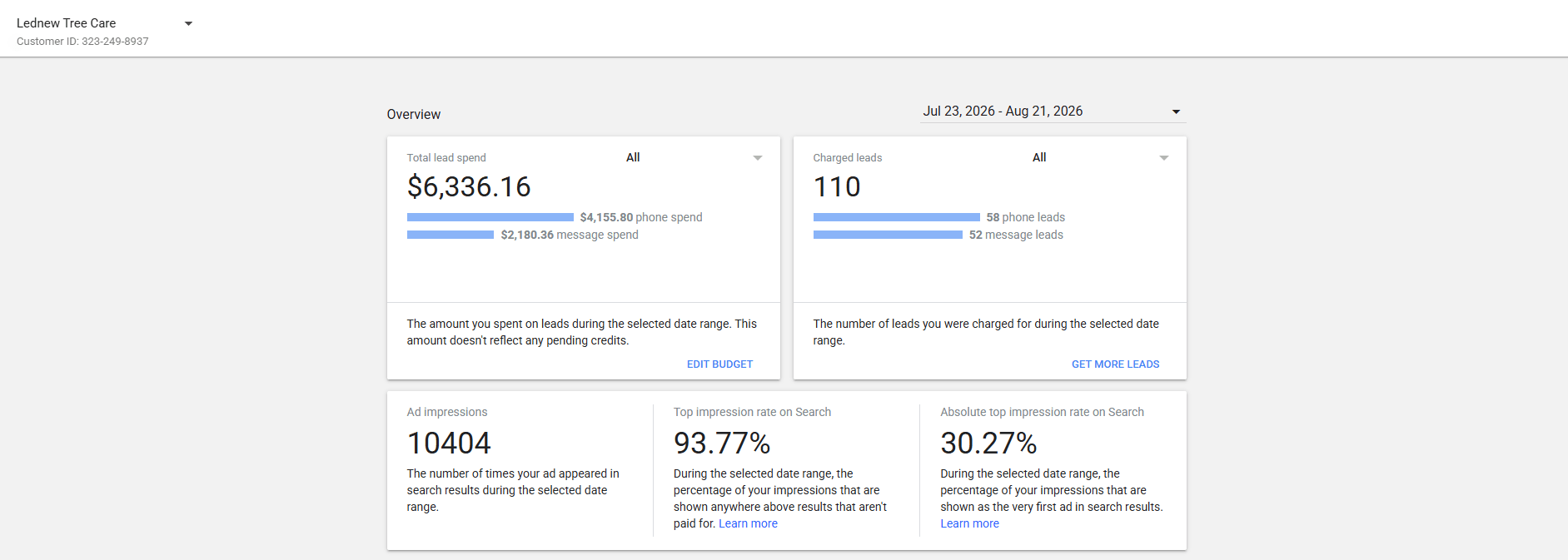
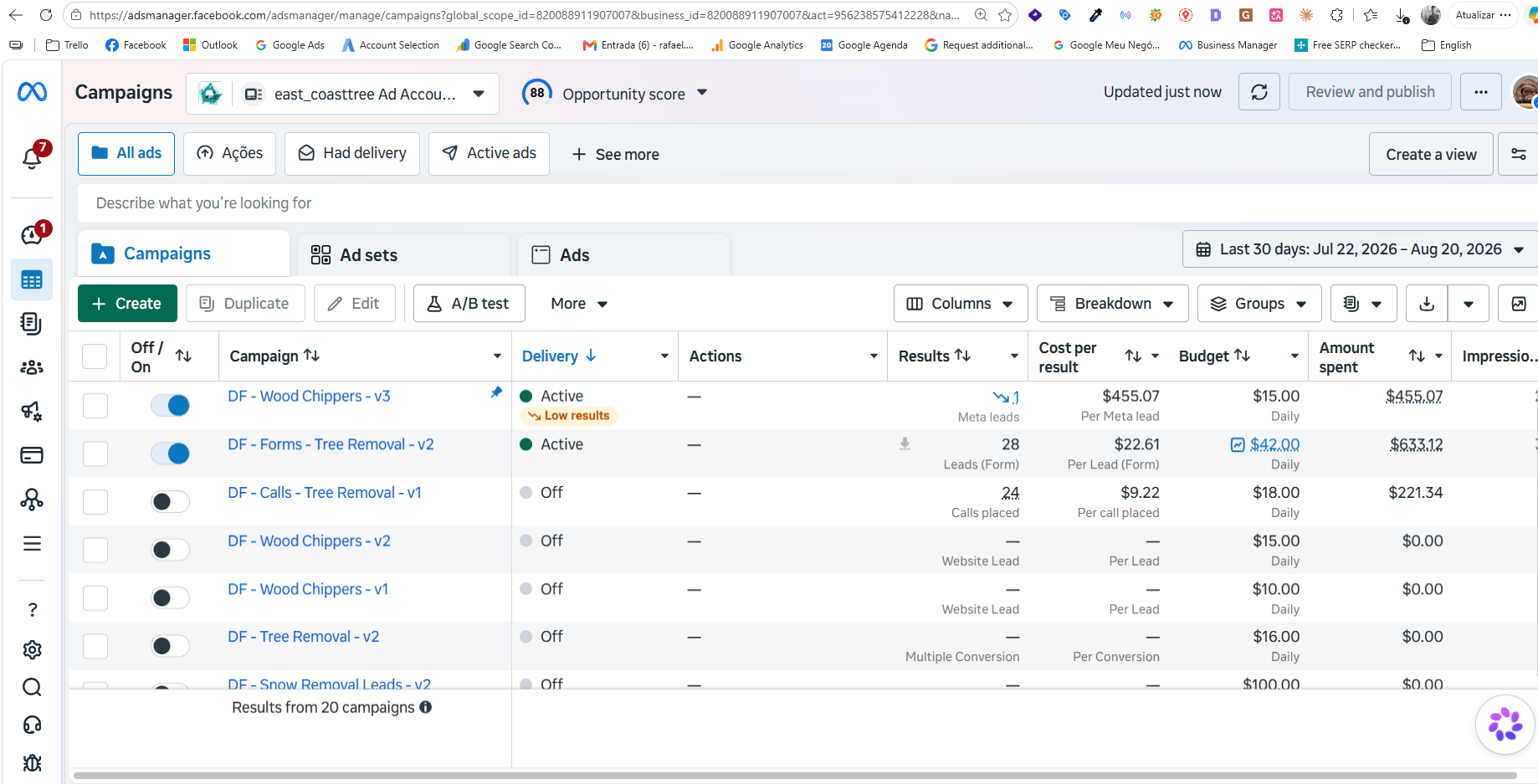
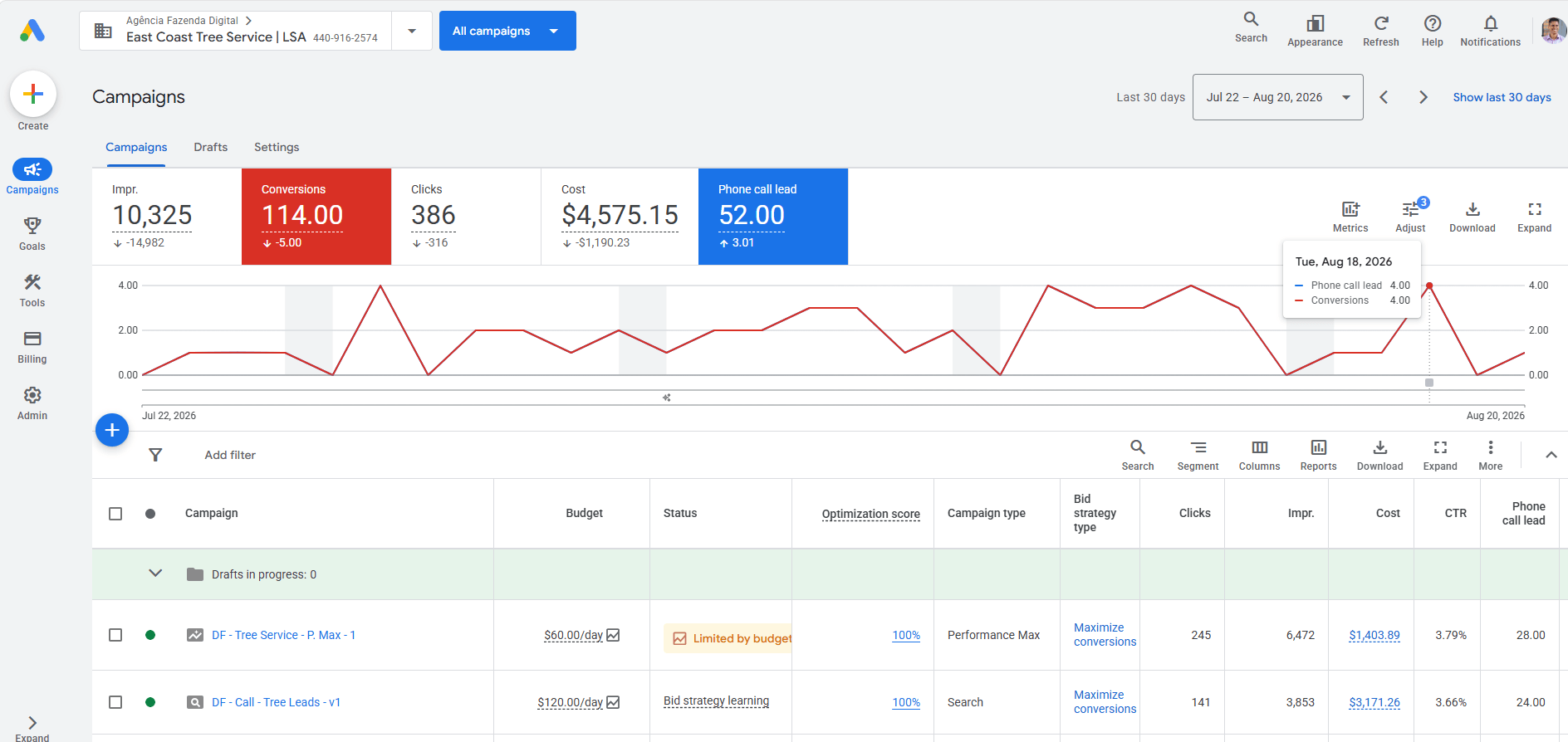
Google Ads and Local Service Ads can put your company in front of homeowners who are already searching.
SEO Compounds
Every service page, city page, article, backlink and ranking adds to an asset your company owns.
As those pages gain authority, one website can begin ranking for hundreds of variations that were never individually purchased as clicks.
The Strongest Strategy Uses Both
Paid search lets us capture demand while SEO grows.
SEO gradually reduces the percentage of your opportunities that must be purchased one click or one lead at a time.
This is also why SEO is part of our broader Crew Builder system rather than being treated as an isolated marketing tactic.
How Much Does Tree Service SEO Cost?
Standalone tree service SEO with Digital Farmers starts at $1,000 per month.
That includes ongoing work across website optimization, technical SEO, content, local SEO, Google Business Profile strategy, authority building and reporting.
However, most tree service companies should compare that against our Crew Builder plan.
Crew Builder starts at $1,300 per month and combines SEO with a broader digital lead generation system.
For only $300 more than standalone SEO, the company can integrate additional acquisition channels instead of depending exclusively on organic search.
Advertising spend remains separate.
Our objective is not to convince a tree company that SEO is the only marketing channel it will ever need.
The objective is to make SEO one of the strongest assets inside a diversified lead generation system.
Common Tree Service SEO Mistakes
Using One Page to Target Every City
A generic tree service page rarely gives Google enough geographic context to compete across dozens of markets.
We build intentional city and service clusters instead.
Creating City Pages With No Supporting Structure
Publishing fifty thin city pages without service content, internal links or useful local context does not create a strong geographic strategy.
The pages need to belong to a logical website architecture.
Publishing Content Without Commercial Intent
Traffic by itself does not pay a tree crew.
Informational content should support commercial topics and local services, not exist solely to increase pageviews.
Ignoring Google Business Profile
A company can have a strong website and still lose high-intent local searches because its Google Maps visibility is weak.
Organic SEO and GBP optimization need to work together.
Building Cheap Backlinks at Scale
Thousands of low-quality links are not a substitute for legitimate authority.
We prioritize contextual relevance and local authority over raw link count.
Ignoring Technical SEO
Pages cannot generate organic traffic if Google cannot properly crawl, index or understand them.
Technical SEO, schema markup, mobile performance, Core Web Vitals, canonical tags and internal linking support everything else we publish.
Looking Only at Rankings
SE Ranking, Semrush and Ahrefs can all provide useful SEO data, but ranking reports are not the final business objective.
Our operational stack includes SE Ranking, Google Search Console, LocalBrandManager and our own reporting because we want to connect search visibility to the market the client actually serves.
A tree service owner ultimately cares about qualified traffic, calls, estimates, jobs and revenue.
A report full of SEO metrics means very little if the phone is not ringing.
How We Measure Tree Service SEO Performance
SEO performance should be evaluated at multiple levels.
Organic Rankings
We monitor movement for commercial keywords, city terms, service terms and informational queries.
Google Search Console
Search Console shows which queries are generating impressions, clicks and visibility directly from Google.
It also helps identify indexing problems and pages beginning to gain traction.
Google Map Pack Visibility
LocalBrandManager and GeoGrid tracking allow us to measure visibility across a geographic area instead of checking one search from one device.
Calls and Leads
Ranking #1 is useful only when that visibility connects to real business opportunities.
We want to know whether organic traffic and Google Maps visibility are creating phone calls, estimate requests and commercial tree service leads.
Growth Over Time
SEO should leave the business with more assets than it had the month before.
More indexed pages. More useful content. More service-area coverage. More referring domains. More rankings. More reviews. More customer data. More ways to be discovered without buying a shared lead.
Tree Service SEO Built by People Who Work With Tree Companies Every Day
Digital Farmers is led by Rafael Coltro, Founder at Digital Farmers.
Rafael has worked in digital marketing since 2015, managed approximately $8 million in paid media and currently works directly with tree service companies across multiple U.S. markets.
That experience changes how we approach SEO.
We do not measure success only by whether a graph went up.
We look at whether the company is becoming easier to find for the services and cities that can actually generate profitable work.
That means understanding the difference between ranking for a generic informational phrase and ranking for “tree removal near me” when a homeowner needs a crew.
It means understanding why emergency tree service needs different content from routine pruning.
It means understanding that a tree company with three crews needs a different growth strategy from a one-truck operation.
Tree service SEO should serve the business, not the SEO report.
Build a Search Asset Your Tree Service Company Owns
SEO is different from buying a shared lead.
When you buy a lead from a third-party marketplace, you pay for access to that opportunity once.
When you build a service page that ranks, a city cluster that becomes authoritative or a Google Business Profile that dominates the Map Pack, you are building visibility around your own company.
The page is yours.
The domain is yours.
The rankings are attached to your business.
The customer contacts your company directly.
That is the real objective of tree service SEO.
Stop renting every opportunity. Build the system that generates them.