
Direct mail can bring in tree service leads, but it tends to fit removal or pruning when you’re prepared to offer a discount. It shouldn’t carry your whole marketing plan. The right channels for marketing for arborists depend on the work you want, your service area, close rate, and crew capacity.
You know a full schedule is not always a profitable one. A lead needs to match your work, location, and available crews, then turn into booked revenue. Inquiries that don’t fit simply take up more phone time.
This article compares practical options, including direct mail, your website, Google Business Profile, search, advertising, and customer follow-up. You’ll see how each channel can help, how to track whether it pays, and when it may be a poor fit. The goal is a lead pipeline tied to the work you want to book, not activity that only looks busy.
Key Takeaways
- Choose channels based on the tree work you want to book, your service area, and the crew capacity you need to fill.
- Use a clear business identity and a website that shows your services and qualifications so prospects can assess fit before calling.
- Direct mail is generally a better fit for removal or pruning when you’re prepared to discount the work.
- Track each lead source through cost per lead, close rate, and booked revenue. Inquiry volume alone won’t show whether a channel pays.
- Build your marketing plan around your ideal customers, then strengthen it with a steady review and referral process.
1. Branding and website development
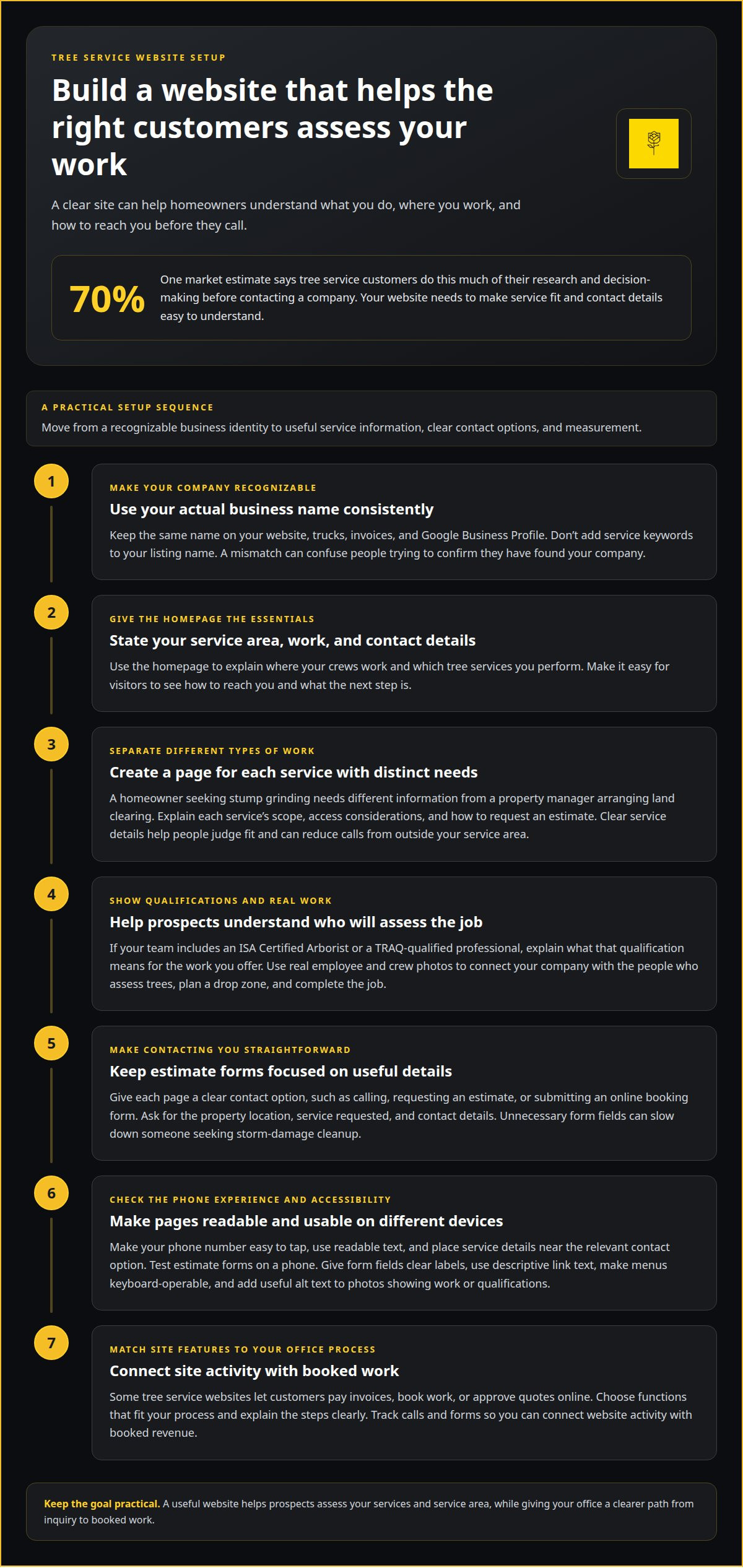
Your brand should help prospects recognize your company before they call. Use your actual business name consistently on your website, trucks, invoices, and Google Business Profile. Don’t add service keywords to your listing name. That can create a mismatch between the name customers know and the business they’re trying to contact.
A website supports the decision process before the phone rings. One market estimate says 70% of tree service customers’ research and decisions happen before they contact a company. Use the homepage to state your service area, the work you perform, and how customers can reach you. Make the next step obvious.
Create separate service pages for work with different needs and buying decisions. A homeowner looking for stump grinding needs different information from a property manager arranging land clearing. Explain the scope, access considerations, and how to request an estimate. Clear pages help prospects judge whether your service fits and reduce calls from outside your service area.
Put qualifications where customers can find them. If your team includes an ISA Certified Arborist or a TRAQ-qualified professional, explain what that qualification means for the work you offer. Use real employee and crew photos to connect your company with the people who assess trees, plan a drop zone, and complete the job.
Give each page a clear next step. A conversion-focused page makes it easy to call, request an estimate, or submit an online booking form. Keep the form practical: ask for the property location, service requested, and contact details. Unnecessary fields can slow down someone seeking storm-damage cleanup.
Design your site for phones as well as desktop screens. A customer may visit after seeing a crew truck or finding your business in Google Search. Make the phone number easy to tap, use readable text, and place service details near the relevant contact option. Test the estimate form on a phone before publishing changes.
Accessibility is part of usable website design. Give each form field a clear label, use descriptive link text, and make menus operable with a keyboard. Add useful alt text to photos that show work or qualifications. Check that text remains readable against its background, including on buttons and navigation.
A website can also reduce back-and-forth with the office. Some tree service sites let customers pay invoices, book work, or approve quotes online. Choose functions that fit your process and explain the steps clearly. Strong marketing for arborists builds a useful online presence, not just a polished look. Track calls and forms to connect site activity with booked revenue. For family business owners or partners managing office operations and exploring additional home-based digital ventures, makingmoneywithbunny.com provides resources and tools for building an online business from home.
2. Is direct mail still effective for tree service companies?
Direct mail can produce work, but it suits a narrower set of situations. It generally fits removal or pruning when your tree service business is willing to discount the job. If your margin can’t support a discount, a flyer may generate calls without profitable booked work. Decide what service and offer the mailer should promote before paying for printing or delivery.
Targeting matters more than sending a broad message across your entire service area. Choose an area where your crews already work, then make the printed piece relevant to nearby removal or pruning services. A homeowner who sees a crew handling a take-down nearby has a concrete reason to consider your company. Reliable direct mail advertising services can help you reach homes around recent job sites, whereas a generic postcard offers less context and may attract requests outside your preferred work.
Make the offer and response path clear. Name the service, define the area you cover, and give homeowners one way to respond, such as calling or submitting an estimate request. Use a tracked phone number or distinct landing page to separate mail responses from other inquiries. Record the lead source and whether the job was booked, not just how many people called.
Yard signs support local visibility after pruning or removal. An 18” x 24” sign at the road can identify your tree service business while the completed work is visible. Place it where passing neighbors can read the company name and contact details. Remove it when it no longer serves the property owner or the job.
Local directory listings act like another set of company records. Keep your actual business name, phone number, service area, and core services consistent across listings. Mismatched details can send calls to an old number or confuse a prospect comparing providers. Prioritize directories local property owners use, and update those records when your contact details change.
For your Google Business Profile, add real project and crew photos that help homeowners recognize your work. A photo of stump grinding or completed pruning offers more useful context than an unrelated stock image. Keep captions factual. Show the work you perform without promising results.
Video can show process where a flyer has limited space. A short clip can explain how you assess a tree, plan access, or protect the drop zone during a removal. Keep the subject focused and the next step visible. For service marketing, the actual job matters more than production polish. Use direct-mail planning when a targeted campaign fits your service mix, and connect each response to its source so you can judge the campaign by booked work.
3. Tracking lead-generation costs and profitability
A busy call log can still hide weak marketing performance. Track each inquiry from first contact through estimate, close, and completed work. Use consistent source labels for Google Business Profile, Facebook, paid advertising, direct mail, referrals, and employee-generated leads. This shows which channels produce booked jobs, not just phone activity.
Cost per lead is one measure, not the final decision. Compare the cost of attracting an inquiry with its close rate, job type, and booked revenue. A channel that brings stump grinding requests may perform differently from one producing crane-assisted removal estimates. Review results by service so a lower-cost inquiry doesn’t automatically appear more profitable.
Keep a simple record for every lead. Capture the date, source, service requested, service area, estimate status, outcome, and booked value. Note why a prospect declines, such as price, timing, or work outside your area. That detail helps you distinguish weak lead quality from a slow estimate process or limited crew capacity.
Advertising needs its own tracking. Connect campaign records to calls and forms, then compare inquiries with estimates and booked work. If a campaign attracts storm damage cleanup calls but your crews are committed, the issue may be scheduling capacity, not demand. Pause or adjust spending based on backlog and the jobs you can serve.
Give employee-generated leads their own source label. A crew member may meet a neighbor while pruning, or a plant health care technician may hear about a concern at another property. Record these leads separately from referrals and paid advertising. This shows how field visibility contributes to your pipeline without confusing it with digital marketing results.
Use the same tracking method for Facebook posts and Google Business Profile activity. Record whether a lead came from a specific post, a profile call, or a website form. If the source is unclear, ask callers how they found your tree service business and log their answer. A consistent record is more reliable than memory during a busy workweek.
Review the numbers on a schedule that supports operating decisions. Compare lead sources with close rate, booked revenue, crew availability, and service area. For example, a channel may bring suitable pruning estimates but few removal jobs. Keep it if those jobs fit your seasonal plan, or adjust the strategy if it fills the wrong backlog. Lead generation should support real capacity, not just increase inquiry counts.
4. Customized marketing plans for tree care companies
The right strategy depends on your service area, target customers, crew capacity, and the work you want to book. Start with clear goals, such as growing your customer list, raising revenue, or pursuing larger contracts. Then choose channels that can reach those customers and track whether inquiries become suitable estimates.
Advertising claims should match the qualifications and services you actually provide. Licensing requirements depend on your state or locality and the work offered, so identify applicable rules before advertising regulated services. Don’t imply that every crew member is an ISA Certified Arborist or TRAQ-qualified if only specific staff hold those credentials.
Build your plan around two or three types of ideal customers. A homeowner seeking pruning, a property manager planning land clearing, and a commercial client needing right-of-way work may have different timelines and decision-makers. For each group, define the property type, budget, preferred contact method, and services that fit your crews.
Plant health care needs a different explanation from a take-down. Homeowners can’t judge an unseen treatment by looking at the finished property. Give them a handout that names the tree concern, describes the planned treatment, and explains why it matters. For pruning, explain the species’ needs and intended result instead of listing every branch your crew will cut.
Use practical tree care resources to create useful content. An ISA Certified Arborist can explain common tree conditions, while a crew lead can describe access planning for crane-assisted removal. AI tools can help organize notes into draft topics or customer emails, but a qualified person should check technical details before publication. An incorrect species or treatment claim can undermine trust.
Match channels to the buying cycle. Email can keep your tree service business visible as weather and seasonal demand change. A past pruning customer may be worth contacting about repeat work four to six years after the initial service. Tailor the message to the customer record, then measure replies, estimates, and booked work rather than email opens alone.
Review your plan against actual results and operating limits. If plant health care inquiries rise while treatment capacity is full, adjust campaign timing or focus on another service. If larger contracts are the goal, build examples and materials for property managers instead of relying on broad homeowner messaging. Keep tree service marketing tied to work your company can profitably deliver.
5. Online reputation and customer reviews
Homeowners comparing tree care companies want evidence before approving work. Your Google Business Profile brings reviews, photos, service details, and contact information together. Keep it current and respond to reviews directly and professionally. A useful reply acknowledges the customer and addresses the work without sharing private property details.
Review count and rating both shape how a prospect reads your reputation. One example compares a tree service profile with 80 reviews and a 4.7-star rating against another with 12 reviews and a 5.0-star rating. The higher rating alone does not show the same depth of customer history. A steady pattern of genuine reviews and thoughtful replies gives prospects more context.
Ask satisfied customers for a review after the job is complete. Make the request simple and consistent, whether the work involved pruning, stump grinding, or removal. Don’t pressure customers or write reviews on their behalf. On service pages, three to five relevant reviews can help connect a customer’s experience with the specific work being considered.
Your response pattern matters as much as the profile’s overall rating. A profile with 200 reviews and active responses can signal an established process to someone considering substantial work. Reply to criticism calmly, stick to verifiable details, and offer to resolve private concerns directly. Don’t argue about access, cleanup, or scope in a public thread.
Show actual work, not just a logo. According to a Bazaarvoice study, two-thirds of consumers prefer customer-generated images to professionally created company images. Ask customers to share job photos when appropriate, and post crew or project images with accurate descriptions. A photo of completed pruning helps prospects understand the work your team performs.
Use ideal customer profiles to guide the reputation evidence you collect. A homeowner seeking plant health care may value clear explanations from an ISA Certified Arborist. A property manager planning removal may want examples of similar site work and reliable communication. Match the service page, photos, and review excerpts to each customer’s buying concerns.
Referrals can extend that trust beyond your profile. Ask satisfied customers to recommend your company, then track referred inquiries separately from other sources. A referral program may offer a $50 check or VISA gift card, but only use rewards that fit your margins and process. For help managing your Google Business Profile and customer reviews, request profile support.
Digital Farmers
Digital Farmers helps tree service companies connect SEO, Lead Generation, Google Business Profile, and AI Search with the work they want to book. Turn to the team when your channels are disconnected, lead sources are hard to measure, or inquiries don’t match your service area and crew capacity. The aim is a clearer path from customer search to qualified inquiry, estimate, and booked work, shaped by your market and operations.
Keep your focus on estimates, crews, and the jobs on the schedule. We can review your county’s market and identify practical next steps. Contact Digital Farmers for a market review call at +1 (603) 802-6879.
Set the Next Marketing Priority
Choose the tree work you need to book next. Match that priority to your service area, available crew capacity, and the customers you want to reach. Then decide how you’ll measure progress, such as qualified inquiries, estimates, or booked work.
Marketing for arborists works best when it supports operating decisions instead of creating activity for its own sake. Search demand, weather, and crew availability can change what deserves attention. Keep the plan flexible, but tie each adjustment to work your crews can handle.
Use lead records to see where prospects lose momentum, from first call through estimate and booking. That gives you a practical basis for adjusting follow-up or shifting focus between services without relying on surface-level activity.
For a county-specific review of your next steps, request a market review call at +1 (603) 802-6879. Start with what your market and current pipeline are showing, then decide what to change.
Frequently Asked Questions
Is direct mail still effective for tree service companies?
Direct mail can work when it reaches homeowners near a relevant project and gives them a clear reason to respond. Use a distinct phone number or response code to identify calls from each mailing. Compare those inquiries with completed estimates and booked jobs. If a campaign generates calls but few suitable projects, revise the audience, offer, or timing before mailing again.
Should tree service companies use Google Local Service Ads (LSAs)?
LSAs may be worth testing when your service category and location are supported and someone can handle incoming calls promptly. Track LSA inquiries separately, then record whether each caller falls within your service area, requests work your crews perform, and books an estimate. Judge the channel by qualified opportunities and booked work, not by inquiry count alone. Pause or adjust spending if capacity is tight.
How can arborists improve local SEO and Google Business Profile rankings?
Keep your Google Business Profile accurate, complete, and consistent with your real business name and contact details. Connect it to service pages that explain your work and the areas you serve. Add genuine project updates and respond to customer reviews professionally. Local visibility also depends on competition, relevance, and the strength of your online presence, so track calls and estimate requests alongside map pack visibility.
What keywords do homeowners use to find arborists and tree removal services?
Homeowners often describe the job, the problem, and their location. Examples include “tree removal near me,” “emergency tree service,” “stump grinding,” and “tree pruning services.” Use phrases that match services you actually perform, then build clear page content around each service. A page about cabling and bracing should explain that work directly rather than target unrelated removal searches.
How can arborists generate leads through Google Ads and Local Services Ads?
Separate campaigns by service intent, such as removal, pruning, or storm-damage cleanup, and target areas your crews can reach. Send each ad to a relevant page or call route, then record its source and outcome in your lead records. Review search terms and incoming calls to identify poor-fit requests. A campaign’s value depends on local demand, competition, response handling, and available crew capacity.
Which social media platforms work best for marketing tree care services?
Choose platforms your customers already use and your team can maintain. Facebook can support local project updates, seasonal reminders, and customer questions, while short video can show how a crew prepares a work area or explains a pruning decision. Keep posts tied to your actual services and service area. Track calls or estimate requests from each platform instead of judging performance by reactions alone.
How can arborists get more reviews and referrals from customers?
Make review and referral requests part of your closeout process. After the crew finishes and the customer has had a chance to assess the work, send a simple request through your usual communication channel. Record requests and referrals, but don’t pressure customers or offer incentives for positive reviews. Use feedback to identify recurring concerns about cleanup, scheduling, or communication.
What should an arborist website include to convert visitors into leads?
An arborist website should make contacting you straightforward and help screen out poor-fit jobs. Show service details, credentials, service area, and examples relevant to your work. Keep the phone option visible on mobile and make estimate forms easy to complete. For a market review call for your county, call +1 (603) 802-6879.