

Key Takeaways
A map-pack drop can be a measurement issue, a profile problem, or a real change in local visibility. Check the evidence before making major changes.
- Compare results across several locations in your service area.
- Check your Google Business Profile for verification, duplicate, and accuracy issues.
- Match your profile and website to the tree work you actually perform.
- Track visibility alongside calls, qualified leads, and booked work.
- Make changes methodically, then allow time to assess them.
1. Confirm what “dropped out” actually means
A tree service not ranking on google maps may be a real loss of visibility, but one search from one phone is not enough to prove it. Google Maps results can change by location and search, so start by checking the pattern. Keep map results separate from the website listings below them. That gives you a clearer view of what changed and where.
Check rankings across your service area, not from one phone
A search from your shop or home shows what one person may see in one place. It does not tell you whether your listing appears in the neighborhoods where your crews want to work. Check from several points across your service area, using the same search phrases each time. A Google Maps ranking guide can help you understand why a single location is a limited view.
Separate Google Maps visibility from organic search rankings
Your Google Business Profile and your website can show different patterns in search. You might still appear in the map results while the website has slipped in regular organic listings, or the reverse. Note each separately rather than calling both a ranking drop. This distinction helps you decide whether to investigate the profile, the site, or both.
Compare the same search terms over time
A fair comparison uses the same search terms, locations, and tracking method each time. Keep a simple record so seasonal changes or a different search phrase do not get mistaken for a ranking change. These fields are enough to make the comparison useful:
| Search term | Location | Date checked | Result type |
|---|---|---|---|
| tree removal | North service area | Record each check | Maps or organic |
| tree trimming | Central service area | Record each check | Maps or organic |
| emergency tree service | South service area | Record each check | Maps or organic |
Use that record to compare like with like. If the map position shifted in one neighborhood but not others, focus your investigation there instead of changing every part of your marketing at once.
Treat geogrid results as dated, location-specific snapshots
A geogrid can show how visibility differs across points in a service area. It is still a snapshot, not a permanent ranking or a promise about what every searcher sees. Include the date and search term when you review one. The local SEO for tree service page also covers measuring local visibility across a service area, rather than relying on a single search.
2. Check your Google Business Profile for problems
Once you have confirmed that Maps visibility actually changed, review the profile before rewriting your website or adjusting everything else. A verification notice, suspension, duplicate, or incorrect business detail can affect whether customers can find or contact you. Look at the account and listing status first, then review the information customers see. Make only changes you can support with accurate business details.

Look for suspensions, verification issues, or disabled features
Sign in to the account that manages your profile and check for notices or requests for action. Confirm that the listing is verified and that the contact options and other visible features are working as expected. If something has been disabled, read the notice and follow the stated process. Avoid creating a replacement listing before you understand what happened to the existing one.
Remove duplicate profiles without deleting the wrong listing
Search for your business name and service area to find listings that may represent the same operation. A duplicate can confuse customers and make profile management harder. Before removing or requesting a change to any listing, confirm which one is verified and which account controls it. If you are not sure, pause and sort out ownership rather than deleting a profile that has useful history.
Review your primary category, services, hours, and contact details
Check that the primary category describes the main work you do. Then confirm that the listed services, hours, phone number, and website are current. Your profile should reflect the jobs your crews can take, not a longer list added just to appear for more searches. Digital Farmers offers Google Maps work that includes GBP optimization, category and service structure, geogrid tracking, review velocity, photo and post cadence, suspension and duplicate cleanup, and service-area coverage.
Keep your service-area setup accurate and within Google’s guidelines
Set the service area to match where you actually do business. Do not add locations where you have no real ability to serve customers, or use an address that does not represent your operation. If your crews cover a broad territory, be clear about the towns you take work in while keeping the profile information accurate. Correct details are more useful than an inflated map footprint.
3. Make your business more relevant to the searches you want
A working profile can still be a poor match for a particular search. Make sure the profile and website describe the tree work you actually perform and the places you serve. That is a better starting point than adding every service or town name you can think of. Your pages should help a property owner understand what you do and how to reach you.
Match your profile categories and services to the work you actually do
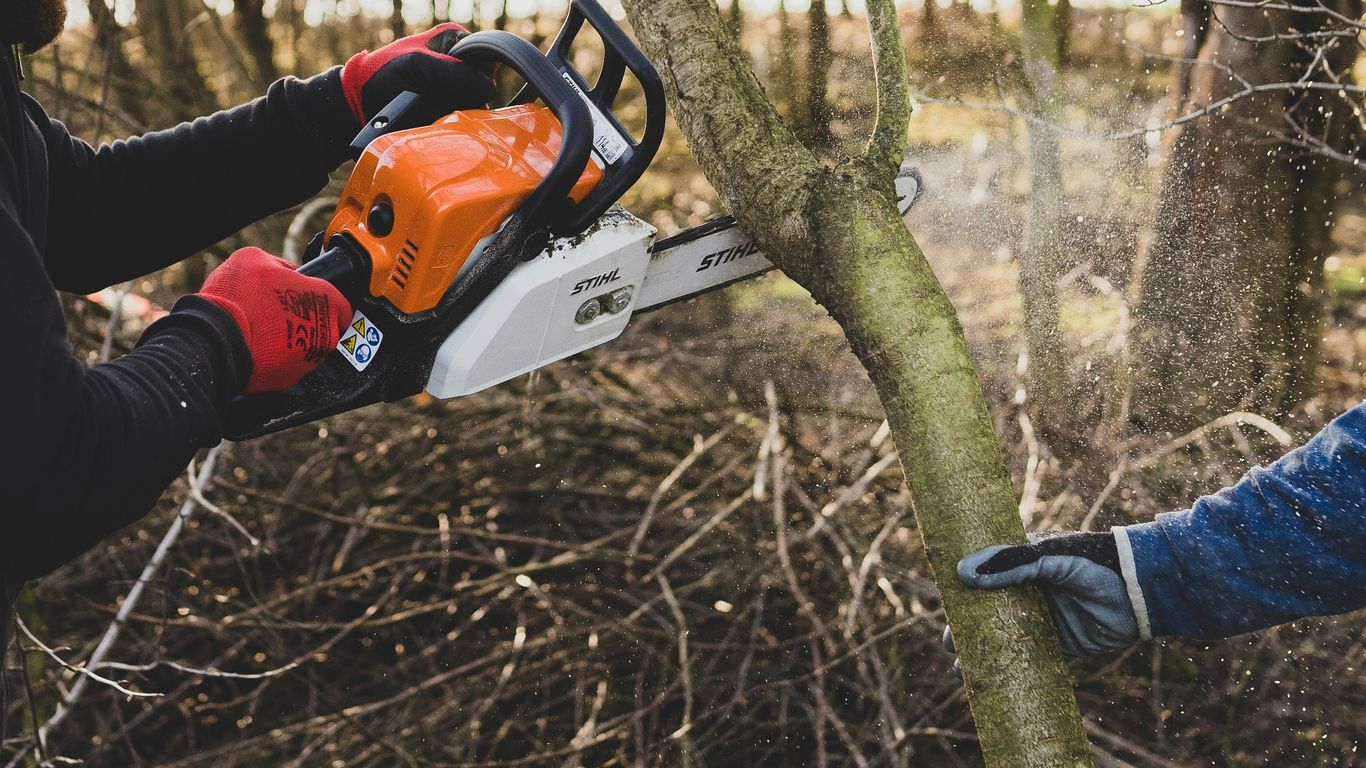
Review your profile against the jobs you want more of, such as removal, trimming, or storm damage cleanup. Use categories and services that accurately describe the business. Keep specialized work on the list only when you perform it. This makes the profile more useful to both searchers and the people answering the phone.
Build useful pages for tree removal, trimming, and emergency work
A homeowner looking for a hazardous removal needs different information from someone planning routine pruning. Give important services their own useful pages, with clear descriptions of the work, service area, and next step. Digital Farmers handles Organic Search through site builds or rebuilds, service and city pages, indexation fixes, internal linking, and technical site work. For broader planning, the tree service seo page is one relevant reference.
Give each city page a real local purpose instead of swapping place names
A city page should help someone in that town understand whether you serve them and what type of work you take there. Add useful local details when you have them, such as the services you offer in the area or relevant examples of work. If changing only the town name is the main difference between pages, reconsider whether each page earns its place. A tree service website design approach should make the service and location clear without padding the site with near-identical pages.
Fix indexing, internal links, and other site issues that hide key pages
A page cannot help much if search engines cannot access it or your site does not make it easy to find. Start with a few practical checks before you make broad edits:
- Confirm that the page is live and not blocked from indexing.
- Check that it has a clear link from a relevant page on your site.
- Review whether another page covers the same service and location.
- Make sure the page loads and works on a phone.
These checks can uncover basic problems without changing your whole site. If the pages are accessible and linked but visibility remains weak, then review their usefulness and whether they match the searches you want. You can also read about tree service ai search when considering how customers may find business information through newer search experiences.
4. Strengthen the signals that build local prominence
Relevance is only part of local visibility. Your profile and site also need clear, current evidence that the business is active and trusted. Focus on genuine customer feedback, recent job information, and consistent business details. These are steady operating habits, not quick fixes.
Ask real customers for reviews and respond without using scripts
Ask customers who have hired you to share an honest review. Keep the request straightforward, and do not offer a reward or pressure someone to write a particular kind of response. Reply in your own voice and address the substance of the review. A natural, specific response is more useful to a future customer than a repeated script.
Add current job photos and profile updates consistently
Use photos from real jobs that show your work, equipment, or crew where appropriate. Keep them current and make sure they represent the services you actually offer. Profile updates can share useful business information, but they should not become a daily chore that takes time away from running jobs. A consistent, manageable rhythm is more realistic.
Earn relevant local links and mentions
Look for honest ways your business may be mentioned by local organizations, suppliers, or community groups. A link or mention should make sense to the people who visit that site, not exist only to manipulate rankings. Local references can also help potential customers confirm that your company is active in the area. For another view of local search visibility, consider how profile information, reviews, and service-area pages work together.
Make sure your business details are consistent across key directories
Check the main directories where customers or partners are likely to look for your company. Your business name, phone number, website, and address details should not conflict across listings. Correct inaccuracies at the source where you can. Consistency supports a clearer picture of your business, though it does not replace a complete profile or a useful website.
5. Account for distance and local competition
Map results can look different across the same service area, even when your profile has not changed. Distance and the businesses appearing nearby are part of the picture. Look for patterns, not a single position, and compare your visibility with the work and neighborhoods that matter to your crews. The goal is to diagnose the gap, not mimic every listing you see.
Understand why rankings can vary from one neighborhood to another
A person searching from one town may see a different set of businesses from someone across the county. That is one reason a strong result near your base does not prove you are visible everywhere you serve. Check priority areas separately and decide which ones are worth pursuing. A large service territory may contain neighborhoods where your business is more competitive and others where distance is a real constraint.
Check whether competitors have stronger profiles, reviews, or local pages
Compare the businesses appearing for the same term in the same area. Look at whether their profile information is complete, whether they have relevant reviews, and whether their site explains the services and locations clearly. Use those observations to identify gaps in your own presence. Do not assume that matching a competitor’s every choice will lead to the same outcome.
Identify suspicious listings without copying their tactics
You may notice listings with names or details that seem misleading. Record what you see and use the appropriate reporting process if you believe a listing violates platform rules. Do not add extra keywords to your own business name, create misleading locations, or copy questionable profile details. Those tactics can create problems for your listing instead of solving the underlying visibility issue.
Set realistic expectations for rural areas and large service territories
A rural service area can cover many miles and a small number of nearby searchers. Results may be uneven from one town to the next, especially when you serve a broad territory from one base. Decide which locations are profitable and practical for your crews, then track those places deliberately. Do not treat weaker visibility in a distant area as proof that every part of your profile has failed.
6. Recover with a measured troubleshooting plan
Once you know what changed, make a short list of the most likely causes and address them in order. Fix urgent profile or website issues first. Avoid changing categories, service areas, pages, and business details all at once, because then you will not know which change mattered. Keep the goal tied to qualified calls and booked work, not just a better-looking report.
Record your current rankings, calls, and profile status before making changes
Write down the searches and locations you are tracking, the profile status, and the calls or inquiries you are receiving. Keep the date with each note so you can compare before and after. If call tracking is in place, make sure you can still identify which calls came from the profile or site. Digital Farmers provides reporting that ties spend to booked work, which fits the broader need to assess marketing by more than visibility alone.
Fix urgent profile or website errors before changing everything at once
Prioritize issues that block customers from finding or contacting you. That could mean addressing a profile notice, correcting a wrong phone number, or restoring access to a key service page. Leave lower-impact edits for later. A tree service marketing plan should fit the work you want and the capacity your crews have to take on.
Track calls and qualified leads alongside visibility
A ranking change matters more if it affects the right kind of work. Track whether inquiries are qualified, whether you can reach the caller, whether an estimate is booked, and whether the job closes. Keep these measures alongside visibility so a position shift does not become the only measure of progress. The tree service leads resource is relevant when you are reviewing lead quality and what happens after a call comes in.
Give changes time to be crawled and evaluated before judging the result
A website edit may take time to be found and evaluated, and map visibility can fluctuate while you wait. Note the date you made each change and avoid interpreting every daily movement as a lasting outcome. Keep checking the same terms and locations on a reasonable schedule. When paid demand is part of your response, the tree service advertising page can help you think about it as a separate channel from organic visibility.
7. Protect your visibility after rankings improve
A better map position is a reason to keep your records current, not a reason to stop paying attention. Profile details can change, and your service mix may shift with the season and crew capacity. Keep monitoring the things customers rely on when choosing and contacting a tree company. Review the business outcome as well as the visibility report.
Monitor profile edits, verification notices, and duplicate listings
Check the profile periodically for unexpected edits or new notices. Make sure the right people in your company can access the account and respond to requests for verification. Keep an eye out for listings that appear to represent the same business. Address issues carefully, and save a record of what you changed.
Keep service details, hours, and contact information current
Update hours and service details when your operations change. Confirm that the listed phone number reaches someone who can handle an inquiry, especially during busy periods. If you stop offering a service or change the areas you cover, adjust the information rather than leaving customers with the wrong expectation. Accurate details save time for both you and the person calling.
Track map visibility across priority terms and locations
Choose a manageable set of searches that reflect your main services, then check them from priority locations. Keep dates with the results and review the trend over time. You do not need to chase every possible phrase or town. Focus on the places where additional booked work makes sense for your crews.
Review booked work and close rates, not rankings alone
A map position does not tell you whether the phone rang or an estimate turned into a job. Compare qualified calls, estimates, booked work, and close rates with your visibility records. If the map result looks better but the jobs do not fit your schedule or margins, revisit which services and locations you are targeting. That is a more useful basis for your next decision than position alone.
Conclusion
A map-pack drop is a reason to check the evidence, your profile, your website, and the locations that matter before making broad changes. Work through the likely causes one at a time, then judge the result by qualified calls and booked work as well as visibility.
Book a Market Review
If you want a clear look at your county’s search demand, competition, and current visibility, book a market review and get straight answers about whether the market is a fit.
Frequently Asked Questions
Why did my tree service disappear from Google Maps?
Possible reasons include a profile or verification issue, inaccurate details, a duplicate listing, changes in local competition, or simply checking from a different location. Compare the same searches and locations before deciding what changed.
How can I tell if my Google Maps ranking really dropped?
Check the same search terms from several points in your service area and record the date and result. One search from your phone only represents one location and one moment.
Are Google Maps rankings the same as organic rankings?
No. Maps visibility and the organic website listings are separate result types. Track them independently so you can identify whether the profile, the website, or both need attention.
Can a duplicate Google Business Profile hurt visibility?
Duplicate listings can confuse customers and complicate profile management. Confirm which listing is verified and controlled by your business before requesting changes or removing anything.
How often should I check map rankings?
Choose a regular schedule that lets you compare the same terms and locations over time. Avoid reacting to every small day-to-day movement; look for a consistent pattern instead.
Should I create a page for every town I serve?
Only create a town page when it has a real purpose for people in that location. A page that only swaps one place name for another may not give customers useful information.
What should I measure besides rankings?
Track qualified calls, estimates, booked work, and close rates alongside profile status and visibility. Those measures show whether your search presence is contributing to the jobs your business wants.