
Direct mail can put your tree service in front of selected neighborhoods. Online marketing can reach people already searching for pruning, removals, or storm damage cleanup. For a tree service, direct mail vs. online marketing is less about picking a winner and more about matching each channel to your service area, crew capacity, and need for booked work.
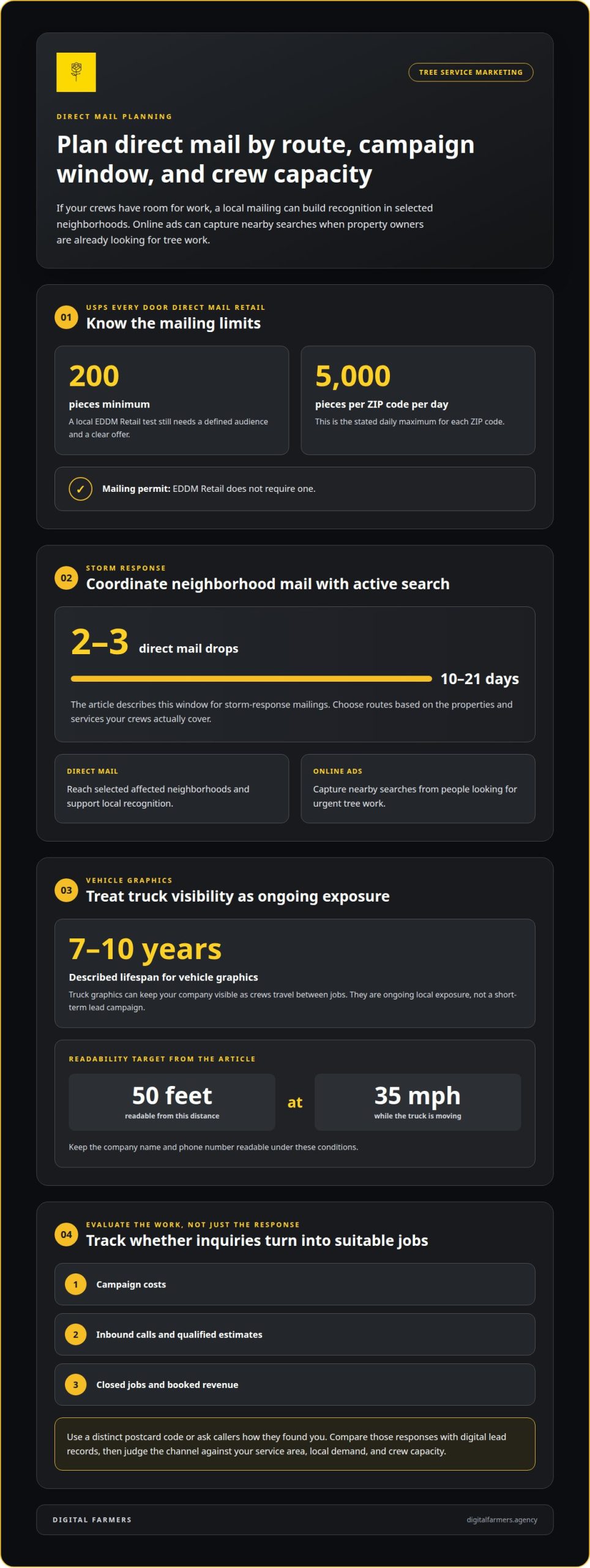
You’re right to look past response counts. A postcard that brings calls from outside your service area, or when your crews are already booked, may not help the business. USPS Every Door Direct Mail Retail requires a minimum of 200 pieces, so even a local test needs a defined audience and a clear offer.
This article explains when direct mail can work, how it compares with digital channels, and what makes a postcard offer worth responding to. You’ll learn how to connect each campaign to trackable calls and jobs, then evaluate it by cost per lead, close rate, and booked revenue, not impressions alone.
Key Takeaways
- Use postcards to build recognition in tree-dense neighborhoods within your service area, then track calls and booked jobs.
- Digital channels can help reach property owners actively looking for pruning, removals, or storm damage cleanup.
- Choose the channel based on crew capacity, local demand, and whether you need to build awareness or capture existing searches.
- Make a postcard offer clear and specific, and use a distinct code or call tracking to connect responses to the mailing.
- Judge marketing costs against qualified leads, close rate, and booked revenue, not response counts or impressions alone.
1. Is direct mail still effective for tree service companies?
Direct mail can help tree service companies build recognition in selected neighborhoods. Online marketing can capture demand from people actively searching for pruning, removals, or storm damage cleanup. Neither channel produces more leads in every market. Compare qualified calls, estimates, closed jobs, and crew capacity before shifting spend.
Postcards suit local work because you can select nearby carrier routes and show the jobs you want. Use a clear service area, a real tree-work photo, and one direct next step, such as calling for an estimate. USPS Every Door Direct Mail Retail requires at least 200 pieces and allows up to 5,000 pieces per ZIP code per day. It does not require a mailing permit.
A postcard can put your company in front of property owners before they need a tree removal or stump grinding. Repeated mailings may reinforce your name, but a broad drop could reach households outside your service area or with no current need. Match the route to your crew coverage, target services, and schedule. Recognition matters only if your team can turn it into suitable work.
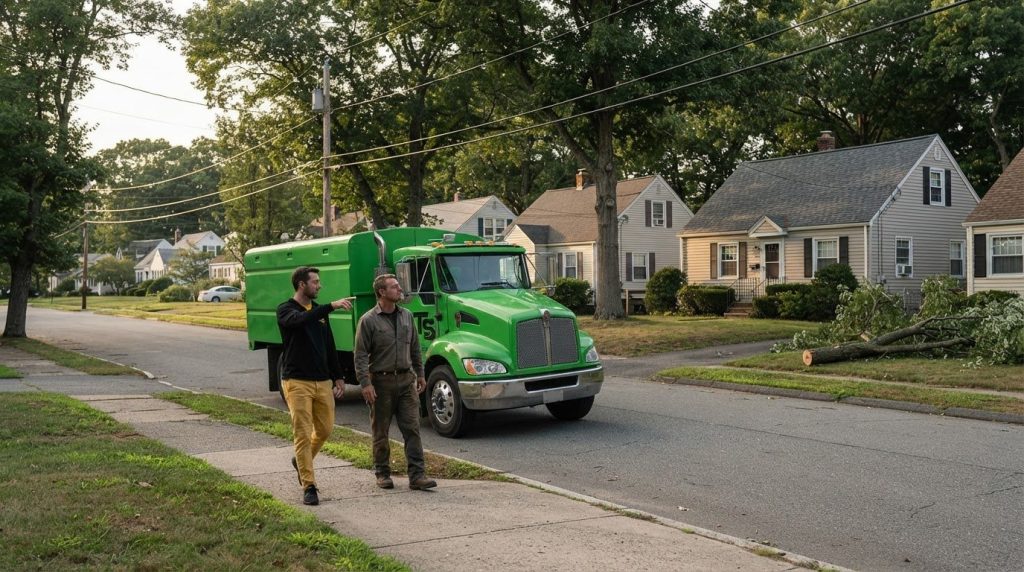
Truck graphics add visibility while crews move between jobs. Keep the company name and phone number readable from 50 feet away while the truck is moving at 35 miles per hour. Vehicle graphics are described as lasting 7-10 years, so treat them as ongoing local exposure, not a short-term lead campaign. A truck parked at a pruning job also puts your name in front of nearby property owners.
Google Ads and Local Services Ads can reach people searching for urgent tree work. Their performance depends on local search demand, your service area, and available ad spend. Keep your Google Business Profile, website, and other listings consistent, with accurate service descriptions, phone number, and coverage area.
After a storm, online advertising can respond to active searches, while direct mail can reach selected affected neighborhoods. Tree service companies can use 2-3 direct mail drops over 10-21 days for storm response. For higher-risk areas, choose routes based on the properties and services you actually cover, then use online ads to capture nearby searches.
Direct mail and online campaigns must comply with applicable postal, privacy, and advertising rules. Requirements depend on the mailing format, audience data, and claims in the ad. EDDM Retail does not require a mailing permit. Keep offers accurate, and use customer information only for its collected purpose.
Measure campaign results by recording costs, inbound calls, qualified estimates, closed jobs, and booked revenue. Use a distinct postcard code or ask callers how they found you, then compare responses with digital lead records. Local competition, seasonality, and service area all affect channel choice. When search demand is active and crews have room, digital ads can capture intent; when you need neighborhood recognition, mail can support visibility.
2. Digital marketing strategy for tree service businesses
Your digital plan should turn local search demand into estimates your crews can handle. Start with the work you want to book, such as pruning, removals, stump grinding, or storm damage cleanup. Build each service page around clear service-area coverage and an easy way to call or request an estimate.
Target your actual service territory, not every nearby town. For a tree service, direct mail vs. online marketing comes down to audience and timing. Separate urgent removal searches from planned tree care so you can see which channel brings qualified inquiries for work your crews can schedule.
Customer research often starts before the first call. One market estimate says 70% of tree service customer research and decisions happen before customers contact a company. Make your website answer practical questions about services, service area, credentials, and estimate requests before a homeowner chooses a provider.
Create a page for each major service, then check whether it attracts relevant calls. A page about crane-assisted removal should explain the work and territory served, rather than sending every visitor to a generic homepage. Make your phone number, service details, and request form easy to find.
Your Google Business Profile supports local visibility, while paid advertising can target searches with immediate intent. Choose channels based on current crew capacity and the jobs you need. If your removal backlog is full but you have room for pruning, adjust your targeting and page emphasis to match available work.
There is no single average cost per lead for tree removal and tree care across channels. CPL depends on local competition, demand, targeting, and how many inquiries become qualified estimates and booked jobs. Compare each channel’s total cost with its close rate and booked revenue.
Track follow-up as carefully as the first inquiry. Record each lead’s source, requested service, estimate outcome, and booked work. Follow up with interested prospects after one day, three days, and seven days. These records show whether a channel generates calls that turn into jobs.
Review performance by service and territory, then make one change at a time. If calls come from outside your coverage area, tighten targeting. If inquiries are for work your crews cannot schedule, adjust your direct mail vs. online marketing mix before it adds pressure to your backlog.
3. Direct mail for older or less tech-savvy customers
Some homeowners prefer a printed message they can keep, read, and share. That makes direct mail a useful option for reaching people who may not begin a tree-care search online. Almost 70% of customers across age groups made a direct-mail purchase in 2013. That figure is historical, not a current response-rate forecast, but it shows mail can reach customers across age groups.
Don’t assume a homeowner’s age determines how they choose a tree company. Use mail to give local residents a clear way to contact you, and keep your digital details consistent for anyone who looks you up. A homeowner might call the number on a postcard or use it to find your website later.
Make the printed message easy to act on. Put your company name, phone number, service area, and specific services where readers can find them quickly. A tree removal postcard should explain the work you handle and how to request an estimate. Avoid dense copy that hides the next step.
Give each campaign a trackable response route. Add a distinct phone number, campaign code, or offer code to the postcard, then record responses in your lead log. Note whether each call concerns pruning, removal, or another service. This helps you compare qualified estimates and booked work, not just calls received.
Past customers can be a practical mailing audience because you already know the work completed and the property location. Send seasonal maintenance postcards 1-2 times per season, with a useful reminder tied to the services you provide. Keep the message relevant to that customer’s prior work instead of sending the same broad promotion to every address.
Mention credentials only when they apply to your company and the service. If your team includes an ISA Certified Arborist, state that clearly and explain how the credential relates to the assessment or work offered. Don’t suggest every job requires an arborist visit. Accurate details give homeowners useful context without unsupported claims.
If your audience prefers phone contact, make calling the primary response option. Keep your phone number and service area prominent, and make sure whoever answers can explain the next step for an estimate. Your website can support the mailing, but it shouldn’t be the only response route. Measure results by completed estimates and booked jobs from the target area.
Treat direct mail as a way to give homeowners access to your service, not as an age-based bet. Keep the message readable, the offer relevant, and the response method clear. Then compare results with your usual lead records to see whether the mailing reaches homeowners your other channels miss.
4. Postcard offers, credentials, and calls to action
Plan a direct mail campaign around one service, one audience, and one measurable action. Choose a target area, write a specific offer, include accurate credentials, and track responses with a unique code. Then compare estimates and booked jobs with the campaign cost.
Start with a job type your crews can take on, such as pruning or removal. A broad offer covering every service gives homeowners less reason to respond. A seasonal pruning message, for example, speaks directly to property owners considering maintenance.
Make the offer concrete without confusing savings with the full job price. State what it applies to, who qualifies, and how to redeem it. Keep the terms easy to read on the postcard.
Credentials should support the service being promoted. If your team includes an ISA Certified Arborist, state that accurately and connect the expertise to relevant tree work. Mention TRAQ only when the credential applies to your staff. Clear facts build confidence; inflated claims create avoidable problems.
Use one primary call to action. Ask homeowners to call for an estimate or visit a specific page on your website. Make the phone number easy to find and give the offer a unique code. That code helps your team identify responses to the mailing.
Review local advertising to see which services and neighborhoods are being emphasized. Use that information to find a clear distinction, not to copy another tree company’s offer. Your postcard could focus on an underserved service, such as cabling and bracing, if your crews provide it and can schedule the work.
Keep the design focused on the homeowner’s decision. Use a relevant tree-work photo, plain service descriptions, and enough contrast to make response details stand out. A postcard listing every green industry service can obscure the one action you want readers to take.
Set up measurement before you mail. Record the campaign area, offer code, calls, qualified estimates, closed jobs, and booked revenue. Compare the results with mailing costs, then adjust the offer or audience for the next campaign. Response counts alone don’t show whether the work was profitable.
For example, a tree company with open pruning capacity could mail a pruning offer to nearby homeowners. The postcard should explain the service, identify any applicable arborist credential, and invite estimate requests. Track responses from the code through booked work, then decide whether to repeat the mailing in that area.
Keep the offer practical and within your operational capacity. It should match your service area, crew availability, and estimate process. Clear terms, relevant credentials, and one direct action give homeowners a reason to respond and help you measure the campaign.
5. How much does online marketing cost for a tree service business?
Set a budget around your crew capacity, not a number copied from another business. Marketing costs depend on your channels, service area, local competition, and the work needed to reach qualified homeowners. A removal campaign in a competitive metro area has different needs from a pruning campaign in a smaller service area.
Separate ad spend from the cost of planning and managing campaigns. Ad spend pays for placements; campaign work can include setup, targeting, and ongoing adjustments. Ask for a clear breakdown so you can see what goes to media and what covers the work behind it.
Cost per lead also depends on the services promoted and the quality of each inquiry. A call about crane-assisted removal may have different value and scheduling needs from a plant health care inquiry. Track qualified leads, estimates, close rate, and booked revenue by service. A low CPL means little if callers are outside your territory or need work you don’t offer.
Your website affects what advertising traffic can produce. If homeowners can’t find your phone number, service area, or removal details, paid clicks may not turn into calls. Review the estimate path on a phone and fill gaps in service information before raising campaign spend. Accurate details on your Google Business Profile also support local discovery.
Set spending according to the work you can take on. If your crews have room for pruning but a full removal backlog, direct campaign attention toward pruning. If storm damage cleanup is a priority, match the advertised service and territory to dispatch capacity. Review calls and estimates regularly, then shift spending as the work mix changes.
The cost depends on your service area, selected channels, campaign scope, website condition, and ongoing optimization needs. Define your target services and schedule first. That gives you a sound basis for evaluating the work and budget involved.
For a practical comparison, record ad spend, campaign management, qualified leads, estimates, and closed jobs over the same period. Compare cost per lead with close rate and booked revenue, not clicks alone. If tracking is incomplete, add a lead-source field to your call log before changing the budget.
Use a market review to map local demand, channel options, and budget priorities for your county. Request a market review to assess which marketing costs fit your service area and crew capacity.
Digital Farmers: SEO
Digital Farmers helps tree service companies build a steadier pipeline through Google Maps & Local SEO, Organic Search / SEO, Paid Demand / PPC Management, and AI Search Optimization. These channels support your mail and paid campaigns by helping homeowners find your services when they search online.
The focus is practical: clarify your service area, connect local searches to relevant tree-work pages, and track inquiries through estimates and booked jobs. That gives you a clearer view of which channels support crew capacity and where leads come from. Results depend on your market, competition, website, and target services.
For a market review focused on your county, contact Digital Farmers at +1 (603) 802-6879 or visit digitalfarmers.agency.
Set Your Next Marketing Priority
Choose your next move based on the work you want on the schedule, not the channel that looks busiest. Decide which service needs demand, which neighborhoods fit your coverage, and how much work your crews can take on. Then give each channel a clear role and judge it by qualified inquiries and booked work.
Keep the direct mail vs. online marketing decision flexible as seasonal demand and your backlog change. Organize lead records so you can see which activity brings the right calls. A market review for your county can help identify where to focus when the numbers are unclear.
We can discuss your local market and the channels that fit your service area. Schedule a market review call for your county or call +1 (603) 802-6879. Make the next decision with your crews, schedule, and actual lead data in view.
Frequently Asked Questions
Is direct mail still effective for tree service companies?
Direct mail can be effective when the message gives homeowners a clear reason to act. A postcard about storm damage cleanup, for example, should focus on that service rather than list every type of tree work. Match the offer and response instructions to what your crews can schedule. That makes the mailing a useful sales tool, not just another piece of company branding.
How Is Direct Mail Beneficial For Businesses?
Direct mail lets a tree company control its message, format, and audience. You can explain a service in plain language and show the type of work you handle without relying on homeowners to find a search result first. A postcard also puts your company name and contact details in the household, where readers can share them with a family member or property manager.
What does a tree service mailing cost?
Mailing costs vary by campaign. An addressed customer mailing and a saturation drop use different distribution approaches. To plan accurately, separate postal charges from printing and production, then choose how many addresses fit the campaign’s purpose. Compare total spend with estimates and jobs attributed to the mailing.
What response rate should you expect?
Response benchmarks vary by audience and delivery method, so use them as context rather than a forecast. DirectMail.io reports 3% to 9% response rates for targeted carrier-route home-services lists, compared with 0.5% to 2% for EDDM saturation drops. A response is not automatically a qualified tree-work inquiry. Record which calls fit your service area and requested services.
How much does direct mail marketing cost for a tree service business?
Compare campaign budgets on the same basis before deciding whether a mailing fits. A one-time postcard drop and recurring online activity have different spending patterns. Set a campaign limit that matches your available crew capacity, then assess whether the resulting work supports that spend. A high delivery count alone doesn’t show that the campaign paid off.
What response and conversion rates can tree services expect from direct mail campaigns?
Response rates measure people who contact you; conversion rates measure the share who become customers. They answer different questions. For a tree service, also separate estimate requests from calls about work outside your territory or scope. This breakdown shows whether the offer attracted the right property owners, even when the total response count looks strong.
Which online marketing channels work best for local tree services: Google Ads, SEO, social media, or directories?
Use Google Ads to reach people actively searching for a service, and use SEO to support visibility in organic results over time. Keep directory listings accurate and consistent with your Google Business Profile management. Social posts can show completed tree work, but they should not replace clear service information and a direct contact method. Review qualified inquiries by source before shifting effort.
For a market review focused on your county, contact Digital Farmers or call +1 (603) 802-6879.