
Google Ads for tree companies should reach people in your service area who need work your crews can take on. Set location targeting around the areas you actually serve, separate ads by service, and track which calls become booked jobs. Clicks from outside your territory or for services you don’t offer spend budget without filling your schedule.
A busy phone doesn’t always mean a productive day. Callers may be outside your service area, need work you don’t offer, or reach you when your crews are booked. Judge ad performance by qualified calls, close rate, booked revenue, and crew capacity, not click totals alone.
This article covers how to target service areas, match ads to tree work, and turn calls into bookings. It also explains how to reduce irrelevant clicks and spot budget leaks, including search terms that attract the wrong jobs and gaps between inquiries and booked work. The right setup depends on your services, local search demand, and capacity to take on more work.
Key Takeaways
- Separate ads by tree service so removal, trimming, and stump grinding searches lead to relevant information.
- Set geographic targeting around the towns your crews can serve, not a broad area that pulls in out-of-territory calls.
- Review search terms and add negative keywords to filter out clicks tied to work you don’t offer.
- Compare ad spend and management fees against qualified calls, close rate, and booked revenue to spot budget leaks.
- Write headlines and calls to action that name the service and make the next step clear to potential customers.
What Does Google Ads for Tree Service Companies Look Like?
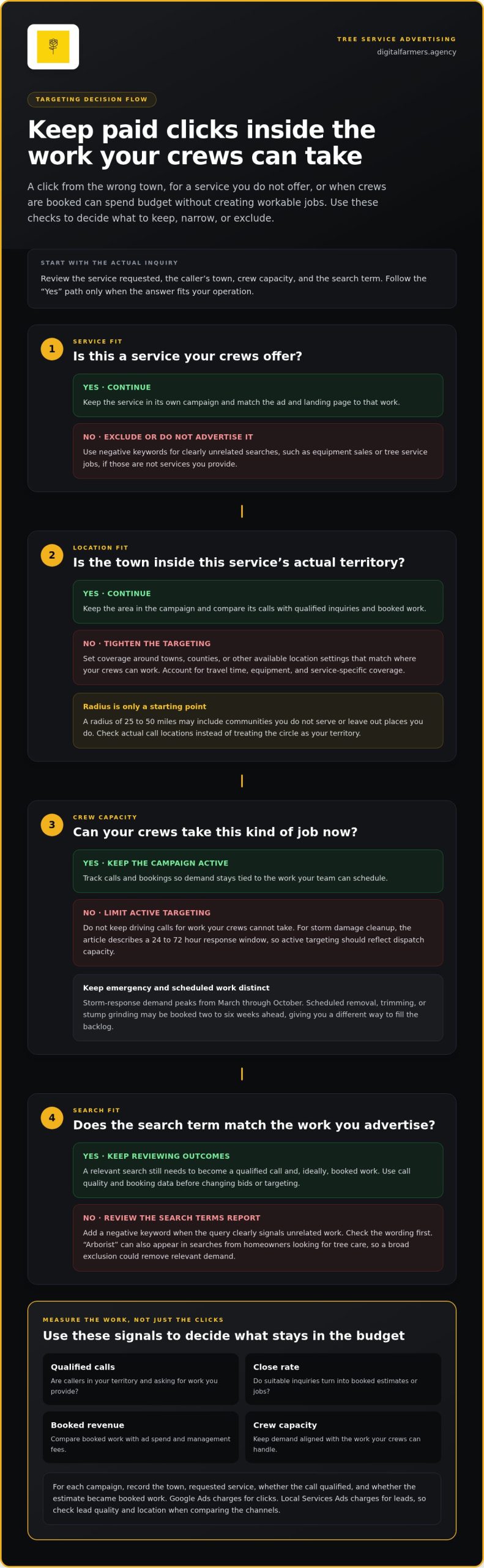
Google Ads for tree companies should connect each search to a service your crews can provide. Separate campaigns, call tracking, and focused budget decisions help you see which ads generate qualified inquiries and booked jobs.
Create separate campaigns for tree removal, trimming, stump grinding, and other services you want to sell. One suggested structure uses six to ten campaigns, each focused on a major service. This lets you compare demand and cost per lead for crane-assisted removal and stump grinding instead of blending them into one total.
Match each campaign’s ads and landing page to its service. A removal ad should lead to information about removal, not a general list of tree services. With Google Ads for tree companies, align each campaign with its service area, the calls your team can answer, and available crew capacity.
A campaign can be running and taking calls within 24 to 48 hours. Qualified leads typically take longer, with paid campaigns often producing them within two to four weeks. Storm-response demand peaks from March through October, so plan the emergency campaign and its budget around your actual dispatch capacity. During storm seasons, the recommendation is to increase bids by 15% to 25%, not to spend without a limit.
Emergency and Scheduled-Service Campaigns
Emergency searches and planned work need different ads and response plans. Storm damage cleanup ads should make the emergency service clear and route calls to the person handling dispatch. The work can require a 24-to-72-hour response window, so limit active targeting when crews cannot take additional calls.
Scheduled campaigns can promote planned tree removal, trimming, or stump grinding. These jobs are often booked two to six weeks ahead, so they offer a different way to fill the backlog. Review emergency and scheduled calls separately. A high call count is not useful if it exceeds crew capacity or brings in work outside your service area.
Conversion Tracking and Optimization
Set up conversion tracking for calls, form submissions, and booked appointments from each campaign. Compare those actions with qualified calls, close rate, and booked revenue. A click shows activity, not a job. Tracking helps you see whether removal or stump grinding ads bring in work your crews can schedule.
Review search terms, call quality, and booked outcomes before changing targeting or bids. Pause terms that attract irrelevant work, and adjust campaigns that bring suitable calls but few bookings. Consider automated bidding once you have enough conversion data to guide it. Until then, use available call and booking data to guide changes, rather than optimizing for click volume alone.
Geographic targeting and service areas
A click from outside your service area costs money without giving your crews a workable job. Set Google Ads location targeting around the towns you serve, then compare call locations with booked work. A radius of 25 to 50 miles can be a starting point, but it may include communities you don’t cover or exclude places you do.
Base targeting on dispatch realities, not a neat circle on a map. List the towns your crews can reach for routine trimming, emergency storm cleanup, and larger removals. If travel time, equipment, or crew availability limits a service, tighten that campaign’s geography instead of advertising every service everywhere.
Tree service companies operating across the United States can create separate location groups for each territory they serve. Use towns, counties, or other available location settings that match each crew’s coverage, then review where clicks and calls originate. A territory with long travel times may need tighter targeting than one where crews regularly work across nearby communities.
Cost per click and cost per lead vary with competition, service type, and local search demand. Treat these as market figures, not a recommended budget. Compare your own cost per qualified call and booked job with job value and crew capacity.
Google Ads charges for clicks, while Local Services Ads (LSA) charges for leads. LSA may show a Google Guaranteed badge when applicable, but it is a separate advertising format with its own screening process. Don’t assume the badge means regular search ads have the same screening, or that an LSA call will fit your service area. Check lead quality and location when comparing the two channels.
Keep a simple location report for each campaign. Record the town, requested service, whether the caller qualified, and whether the estimate became booked work. If trimming calls from a distant town rarely close, narrow that campaign’s targeting. If removal leads from the same town become booked jobs, retain that area and assess whether your crews can handle more volume.
Your Google Business Profile service area details should match the areas you advertise and serve. Consistent coverage information helps customers understand where your company works, while paid campaign targeting still needs its own location review.
Negative keywords and avoiding irrelevant clicks
A click may come from someone seeking a job, equipment, or advice rather than tree removal. Use negative keywords and review search terms to keep paid traffic focused on work your crews actually take.
Negative Keywords and Wasted Spend
Add a negative keyword when a search clearly signals a different need. For example, if your tree service doesn’t sell equipment, exclude searches for chainsaw sales or tree service jobs. Check the wording before adding broad exclusions. “Arborist” may also appear in searches from homeowners looking for qualified tree care, so blocking it could exclude relevant demand.
Search Term Reviews
Open the search terms report and compare actual queries with the services you advertise. Flag irrelevant searches, such as DIY stump removal instructions, and add suitable negatives. Keep useful searches, including emergency tree removal or tree trimming in a town you serve. Then check whether those searches led to qualified calls, estimates, or booked work.
Build your keyword list around high-intent services and the areas you cover. A homeowner searching for “tree removal near Goffstown, NH” signals a more direct need than someone looking for general tree information. Pair service terms with towns or counties your crews can reach. Keep emergency tree terms in a separate campaign so you can assess call quality and dispatch capacity.
Group keywords by one clear job, not by every phrase that contains “tree.” Removal searches belong together; trimming and stump grinding need their own themed ad groups. The recommended structure is 10 to 15 closely related keywords per ad group. That keeps the ad copy tied to the search and helps you identify which service terms are spending without producing qualified calls.
Apply the same review process to seasonal searches and routine work. After a storm, emergency tree removal searches may be relevant, while searches for storm cleanup jobs may indicate employment interest. Check intent before excluding a term. A negative keyword should remove a poor fit, not block useful searches from homeowners in your service area.
Keep a simple change log with the search term, negative keyword, and affected campaign. Compare the next calls and booked estimates with the change. If the negative term cuts irrelevant inquiries without reducing qualified removal or trimming leads, keep it. If relevant calls decline, revise the exclusion.
Where Is Your Google Ads Budget Leaking?
Ad spend can rise while booked work stays flat. Before changing the monthly budget, compare campaign costs with qualified calls, close rate, and crew capacity.
Seasonal Ad Spend
Seasonal demand can change which services deserve budget. Storm-response campaigns may need more room when emergency calls increase, while scheduled tree trimming can help fill the backlog during quieter periods. Set spending limits around the work your crews can accept, then adjust by campaign as call quality and capacity change.
If storm cleanup fills your dispatch schedule, reduce that campaign’s exposure rather than paying for calls you can’t take. Keep scheduled removal or trimming campaigns active only when those jobs fit available crew time. Let ad spend follow the work you can book, not the weather alone.
Cost Per Booked Job
A lead isn’t a booked job. Calculate cost per booked job by dividing campaign spend by the jobs that close. Then compare the result with booked revenue and operating costs. A campaign with more calls can still waste budget if callers don’t qualify or estimates don’t convert.
Track each service separately. If tree removal calls close while trimming inquiries rarely book, review the trimming search terms, landing page, and estimate follow-up before shifting budget. Use close rate to judge whether a higher lead cost is producing worthwhile booked work.
Testing Budget
Set a testing budget for a defined campaign, service, and service area. Testing several services at once can blur the results, especially if calls and bookings aren’t tracked by campaign. Start with one clear change, such as a tree removal campaign targeting a town you serve, and record qualified calls, estimates, and booked jobs.
Keep the test running long enough to collect useful conversion data, then compare its outcomes with the previous setup. Don’t call it a success just because clicks rose. Base the decision on qualified inquiries and booked work within your service area.
Monthly ad budgets vary with local search demand, service mix, competition, and crew capacity. Set limits by campaign instead of assigning the whole budget to broad searches such as “tree service near me.” This makes it easier to see whether removal, trimming, or emergency work is using spend efficiently.
PPC management fees may be a flat monthly fee or a percentage of ad spend. Keep that fee separate from the money paid for clicks when reviewing your budget. Assess management work by practical outputs, including accurate tracking, search-term reviews, and clear reporting on booked jobs.
Find budget leaks by matching campaign spend with call records and estimates. Look for paid clicks without qualified calls, qualified calls without estimates, and estimates that don’t close. Each gap points to a different fix, from tighter targeting to better follow-up, rather than an automatic budget increase.
Ad headlines, descriptions, and calls to action
A homeowner searching for tree removal needs a clear service match, not a vague promise. With Google Ads for tree companies, each headline, description, and call to action should identify the work, service area, and next step. Keep every ad aligned with its campaign and landing page.
Write separate messages for tree removal, trimming, stump grinding, and storm damage cleanup. For a removal campaign, try a headline such as “Tree Removal in Your Service Area” rather than a broad phrase like “Professional Tree Care.” Name only areas where your crews work, and avoid claims your company can’t support.
Answer the caller’s practical questions in the description. Name the service, explain the next step, and set accurate expectations for contacting your team. A trimming ad can invite homeowners to call for an estimate, while an emergency ad can put storm response at the center of the message.
Make the call to action specific. “Call to discuss tree removal” tells homeowners what happens next. “Learn more” is less useful when someone needs to report a hazardous limb or arrange stump grinding. Match the action to your phone coverage and the crew capacity available for new work.
Send each ad to a landing page that continues the same message. A tree removal headline should lead to removal details, not a generic page listing every service. Keep the service name, areas served, and contact method consistent across the ad and page, so callers can quickly see whether you handle their job.
Use a responsive search ad (RSA) to test different headlines and descriptions. Focus variations on meaningful differences, such as “Emergency Tree Removal” versus “Storm Damage Cleanup,” or a call-focused action versus an estimate request. Judge each variation by qualified calls and booked estimates, not clicks alone.
Change one part of the message at a time when comparing results. If a trimming ad gets clicks but few suitable calls, check whether its headline attracts the wrong work or the landing page lacks clear service details. If calls qualify but estimates don’t turn into bookings, review follow-up and close rate before rewriting the ad.
Record each ad’s service, location, headline variation, calls, and booked work. This gives you a practical campaign comparison without mistaking higher click volume for better performance. Keep messaging that matches your services and revise copy that attracts calls your crews can’t convert.
For help aligning tree service ad copy with your campaign and service area, request a market review.
Digital Farmers: SEO
Digital Farmers helps tree service companies connect paid campaigns with lead generation, Google Business Profile, and AI Search. Consider these channels when you need to assess more than ad clicks, including whether local visibility supports calls and booked work across your service area. The right mix depends on local search demand, the services you offer, and your crew capacity.
Paid advertising can capture active searches, while a managed Google Business Profile supports your presence in local results. Lead generation and AI Search can also fit into a wider plan. Judge performance by qualified calls and booked jobs, not impressions alone.
We can discuss your county in a market review call at +1 (603) 802-6879.
Build a steadier pipeline from your next ad decision
Ad performance matters when it supports the work you want on the schedule. Treat each campaign as an operating decision: which service you want to book, where your crews can work, and what follow-up turns an inquiry into a job.
Digital Farmers connects advertising with SEO, Lead Generation, and Google Business Profile support for tree service companies. A market review can help you assess whether these channels fit your service area, services, and crew capacity.
Book a market review for your county to discuss search demand, local visibility, and your current marketing. Call +1 (603) 802-6879.
Frequently Asked Questions
How do Google Ads work for tree service companies?
Google Ads puts paid listings in front of people searching for tree work, and you pay when someone clicks. A search for emergency tree removal can trigger an ad tied to that service and your chosen service area. The click is only the first step. Track whether the caller is in range, needs work you perform, receives an estimate, and books a job.
What Google Ads campaign types are best for tree removal and tree care businesses?
Service-specific Search campaigns are a practical starting point for tree removal, trimming, stump grinding, and emergency work. They let you match ad copy and the landing page to the homeowner’s needs. Local Services Ads are a separate option that charges for leads rather than clicks. Choose formats based on service eligibility, local demand, call handling, and available crew capacity.
How much do Google Ads cost for tree services, including average CPC and monthly budget?
There is no single cost per click or monthly budget for every tree service company. Competition, service type, location, and search demand affect click costs. Set a budget your business can support, then assess it against qualified calls and booked jobs. Use your campaign data to calculate cost per lead and cost per booked job rather than relying on an unrelated market average.
Which keywords should tree companies target in Google Ads?
Start with phrases that name a service and show intent to hire, such as tree removal, emergency tree service, tree trimming, or stump grinding. Add towns or areas you serve when they reflect your coverage. Keep research, hiring, equipment, and DIY searches separate from customer-intent terms. Review actual queries and exclude irrelevant ones without blocking searches from qualified homeowners.
How should tree service companies target ads by city, ZIP code, or service area?
Target locations your crews can serve profitably, then review incoming calls by customer location. ZIP codes can be convenient, but town or radius settings may better reflect dispatch boundaries and travel time. If routine pruning is viable across a wider area than emergency response, use separate location targeting for those services. Refine settings based on booked work, not map distance alone.
How do tree companies set up call, lead form, and conversion tracking in Google Ads?
Track ad calls, calls made after website visits, and completed lead forms as distinct actions. Mark inquiries as qualified, estimates issued, or jobs booked in your call or customer records. This shows which campaigns generate revenue, not just contact activity. Review tracking whenever you change phone numbers, forms, landing pages, or how your office handles new inquiries.
What landing page elements help tree service Google Ads convert more leads?
A useful landing page names the advertised service, states the service area, and gives visitors a clear way to contact your company. Include details relevant to the job, such as whether the page covers tree removal, stump grinding, or storm damage cleanup. Make the phone number easy to find and keep forms focused on the information needed to respond. Match the page to the ad.
What Google Ads policies and licensing requirements apply to tree service businesses?
Keep ad claims accurate. Don’t imply credentials, services, or response availability your business can’t support. Google’s advertising policies apply to ads and destination pages. Licensing requirements for tree work are separate and can vary by state, locality, and type of work. Follow the requirements that apply where you operate, and describe qualifications truthfully in your ad copy.