
Key Takeaways
Affordable tree service advertising starts with booked-job economics, not raw lead volume. Build channels you own, answer calls quickly, and measure what turns into scheduled work.
- Compare every channel by cost per booked job and close rate.
- Keep your Google Business Profile, website, customer list, and tracking data under your control.
- Use local SEO and paid search together while organic visibility develops.
- Turn completed jobs, reviews, photos, referrals, and follow-up into future demand.
- Cut channels that create activity without qualified opportunities or booked revenue.
Start with the advertising economics that actually matter
You do not need the most leads. You need enough qualified opportunities to keep the crews working at a margin that makes sense. That means looking past the price shown on a lead platform and tracking what happens after the phone rings. Booked work is the real scoreboard.
The basic ideas behind tree service marketing are simple: bring demand to your own channels, respond quickly, and learn which services and towns produce profitable jobs. You can also compare practical tree service leads options without treating every inquiry as equal.
Compare cost per booked job instead of cost per lead
A $45 lead is not automatically better than a $75 lead. If the first source closes one in ten opportunities and the second closes one in three, their costs per booked job tell a different story. Record the source, service requested, estimate amount, close decision, and booked revenue for every serious inquiry.
The useful calculation is total channel cost divided by booked jobs. Include the management fee, tracking cost, and your own time when those costs are material. Then compare the result with your average gross profit by service, not just with the number of calls received.
Account for shared leads, missed calls, and unqualified inquiries
Shared lead platforms can charge up to $100 for an inquiry sold to four or five companies, including cases where the call never connects. A missed call is not automatically a bad lead, but it is still a lost opportunity if nobody follows up. Separate disconnected calls, spam, outside-area requests, price shoppers, estimates, and real opportunities in your records.
A simple call log often shows the leak. Note whether the caller reached a person, whether the job fits your service area, and whether an estimate was scheduled. If you pay for a lead that several companies received, count the competition when you judge the source.
Set a monthly budget around crew capacity and backlog
Your advertising budget should follow capacity, season, and backlog. If two crews have three weeks of work ahead, spending more on emergency demand may only create calls you cannot serve. If the schedule is thin, you can test a controlled increase, but keep enough capacity for estimates and follow-up.
Plan separately for storm spikes, spring pruning, winter pruning, and slower weeks. A budget that works in June may be wasteful in February. The goal is a steady flow of profitable work, not a full inbox that your team cannot answer.
Separate ad spend from marketing and management costs
Keep Google charges, agency or contractor fees, software, direct mail, and production costs in separate lines. The distinction matters because one channel can have reasonable media costs but poor conversion work, while another may need a site repair before additional traffic makes sense. Digital Farmers describes its model as no markup on ad spend, with the client paying Google directly, but you should still review the full cost of any arrangement.
Use a monthly report that makes those costs visible. If you cannot trace a charge to a channel, asset, or business task, ask for clarification before increasing the budget.
Build a Google Business Profile that earns local calls
Your Google Business Profile is often the first place a homeowner sees your company. It needs accurate categories, services, locations, hours, photos, and a clear way to call. A complete profile will not replace good service or fast response, but a neglected one can waste demand you already paid to create.
Keep the information consistent with your website and other listings. Before changing anything, document the current profile, check for duplicates, and confirm that the listed service area reflects where you actually work.

Choose the right primary category and service categories
Choose the primary category that best describes your main business, then add relevant service categories only when you actually provide those services. A company focused on removals may need a different structure from one known for plant health care, cabling and bracing, or land clearing.
Do not add categories because they sound popular. A mismatched category can bring the wrong calls and make the profile less useful to homeowners trying to identify the right contractor.
Add tree services, service areas, photos, and job updates
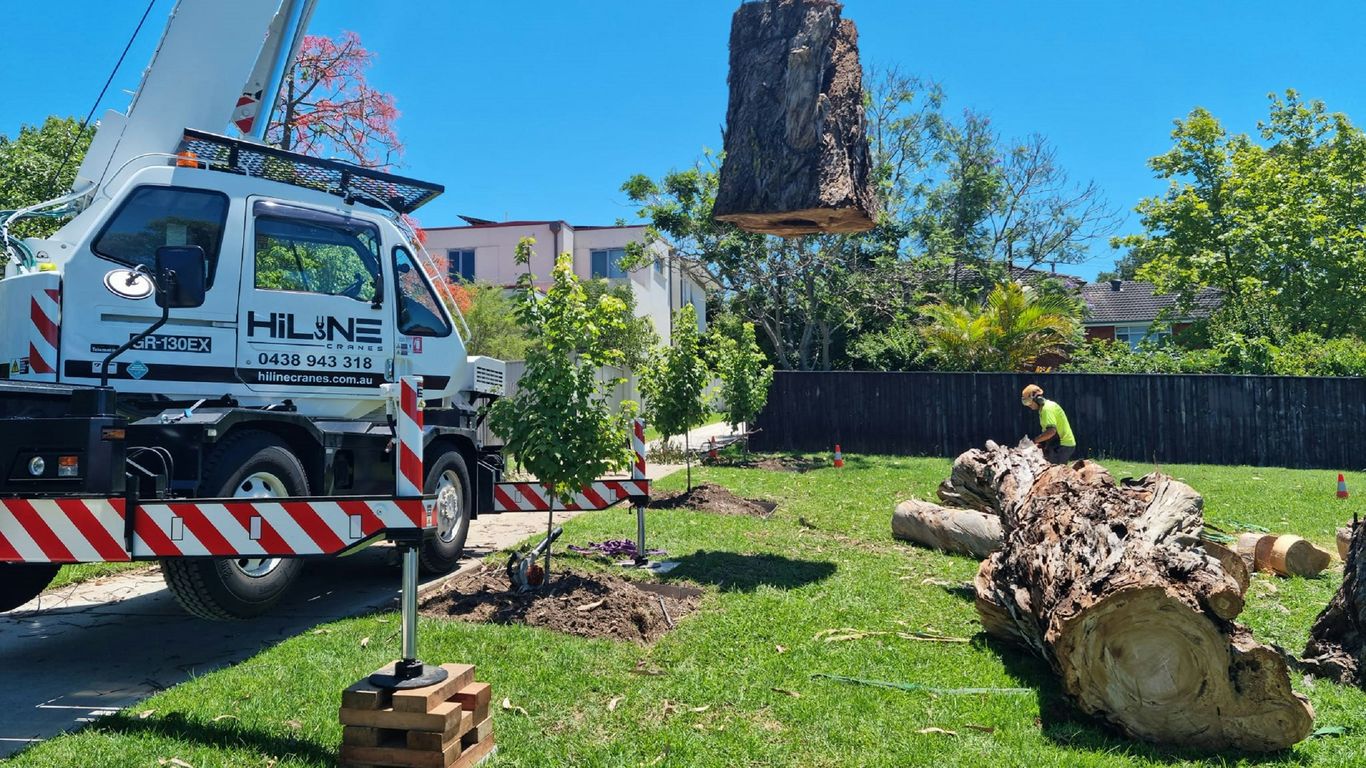
List the work you actually perform, such as tree removal, trimming, stump grinding, storm damage cleanup, and crane-assisted removal. Add service-area information that matches your operating area, then publish real project photos and useful updates. Equipment, access conditions, cleanup, and completed work help people understand what you do.
A photo cadence is easier to maintain when someone takes a few images at each suitable job. Avoid showing addresses, faces, or private details without permission. Your tree service advertising should also send people to a profile and website that agree about services and locations.
Generate reviews from completed customers without violating platform rules
Ask a real customer for an honest review after a completed removal, pruning job, or storm cleanup. Make the request easy to find, but do not offer rewards, script the wording, or pressure customers to leave only positive feedback. Respond to reviews calmly and specifically.
Reviews are evidence of actual customer experience, not a substitute for accurate service information. A steady process is safer than a sudden burst of requests after months of silence.
Track map visibility with dated, market-specific geogrid reports
Map visibility changes by search term, location, device, and date. A geogrid report gives you a more useful view than checking one search from your office, but it remains a point-in-time measurement. Track AGR, ATGR, and SoLV with the date and search term attached.
Lower AGR is better, while higher SoLV is better. Digital Farmers uses market-specific geogrid reporting to show movement without presenting one grid as a permanent ranking. Review the trend alongside calls and booked work, because visibility without conversions does not pay the crew.
Use local SEO to reduce dependence on paid leads
Local SEO takes time, but it can create demand that does not carry a per-lead charge. Start with the services and towns that match your crews, equipment, credentials, and margins. A useful page should help a homeowner decide whether to call, not simply repeat a keyword.
Your tree service seo plan should connect service pages, location coverage, Google Business Profile work, internal links, and technical fixes. For a more local focus, local seo for tree service can help you organize pages around the realities of storm demand, job value, and service areas.

Create focused pages for tree removal, trimming, and emergency work
Give major services their own pages when customers search for them differently. Tree removal, trimming, emergency work, stump grinding, and plant health care each need clear descriptions, service-area relevance, safety information, photos, and a direct next step.
Do not make every page a sales pitch for every service. A homeowner with a storm-damaged tree needs to know how you handle access, hazards, response, and estimates. A pruning customer needs different proof and expectations.
Build location pages without copying the same content across towns
A location page should explain why your company serves that town and what work is common there. Add real service details, nearby project context when appropriate, travel boundaries, and useful local information. Changing only the town name across twenty pages creates thin content and gives visitors little reason to trust you.
Build fewer pages with stronger local substance if that is what your capacity supports. Your tree service website design should make those pages easy to navigate on a phone, with prominent call buttons and service-area clarity.
Fix indexing, duplicate listings, internal links, and technical issues
Check whether important pages are indexed, whether duplicate Google profiles exist, and whether pages compete with one another for the same service. Then review internal links, page speed, mobile layouts, titles, schema markup, and broken forms. These repairs often matter more than publishing another generic article.
Keep a dated list of changes so you can connect technical work with later movement. Do not delete existing assets simply because they are imperfect. Audit first, then repair or replace what is actually holding the site back.
Measure organic calls, qualified opportunities, and booked work
Search impressions and clicks can show whether visibility is changing, but they are not the final business result. Track organic calls, forms, qualified opportunities, estimates, close rate, booked revenue, and the service requested. Tie those records back to the page or profile when possible.
If organic traffic rises but booked work does not, inspect call handling, page intent, pricing fit, and service-area targeting. Organic search is useful when it produces the kinds of jobs your crews can complete profitably.
Spend carefully on Google Ads and Local Services Ads
Paid demand can fill gaps while Maps and organic search develop. It also spends quickly when targeting, tracking, and phone coverage are weak. Start with a narrow test that reflects your actual service area and capacity, then judge it by qualified opportunities and booked jobs.
Do not assume every market or service is a fit. A crane-assisted removal campaign, routine pruning campaign, and storm response campaign may need different budgets, schedules, and landing pages.
Start with high-intent searches in the actual service area
Begin with searches that show a clear need, such as tree removal, emergency tree service, stump grinding, or a location-specific service. Exclude towns you do not serve and avoid broad terms that attract job seekers, equipment searches, do-it-yourself questions, or unrelated tree work.
Match the ad and landing page to the request. Someone searching for emergency removal should not land on a vague homepage that makes them hunt for a phone number.
Control waste with negative keywords and call tracking
Review search terms regularly and add negative keywords when they bring irrelevant traffic. Call tracking can show which campaigns generated calls, but validate the recordings or call outcomes before calling every ring a conversion.
Track answered calls, missed calls, qualified calls, estimates, and booked jobs separately. A low cost per conversion can look good until you learn that most conversions were outside your service area.
Decide when Local Services Ads fit a small tree company
Local Services Ads may fit when you can answer calls promptly, serve the listed area, keep your profile current, and manage estimates quickly. Check the verification and category requirements that apply to your business before relying on the channel.
The channel should sit beside your website, profile, and follow-up process. It should not become another source of inquiries that nobody records or returns.
Increase or reduce spend based on close rate and crew availability
Raise spend only when the team can answer, estimate, schedule, and complete the extra work. Reduce it when calls are poor quality, the backlog is full, or the close rate drops for reasons the campaign cannot fix. Review at least one complete cycle of inquiries before making a sharp change.
A useful tree service ai search discussion also starts with the same fundamentals: accurate services, clear locations, proof of work, and information that answers real customer needs. New search interfaces do not remove the need for solid business data.
Turn reviews, referrals, and completed jobs into advertising assets
Every completed job gives you material that can support the next conversation. A clean removal, careful pruning job, or storm response can produce photos, a review request, a case note, and a referral prompt. Ask for permission and protect customer privacy before publishing anything.
These assets work best when they show how you operate. They should make your company easier to evaluate, not promise an outcome you cannot control.
Ask for reviews after successful removals, pruning, and storm work
Choose a natural point after the work is complete and the customer has had time to inspect the result. Send one clear request with the correct review link, then leave the wording to the customer. If the job had a problem, fix the problem before asking for public feedback.
Do not buy reviews or filter requests so only happy customers can respond. Honest feedback, handled professionally, is more credible than a perfect-looking profile.
Use job photos to demonstrate equipment, safety, and craftsmanship
Take photos that explain the job: the work area, rigging or equipment when relevant, finished cuts, debris removal, and the completed site. Avoid risky staging and do not expose addresses or people without permission. Captions can explain the service without making inflated claims.
A small library of real work often does more than polished stock photography. It shows the type of access, cleanup, and equipment your crew handles.
Create referral prompts for past customers and local partners
Ask satisfied customers to keep your number for neighbors who need similar work. You can also give landscapers, property managers, and realtors a clear explanation of the jobs you accept and the towns you serve. Keep the request simple and do not promise a reward you cannot administer consistently.
Your website should make referrals easy to act on. The tree service website design resource covers a site structure built around service areas, proof, mobile usability, and clear contact paths.
Avoid exaggerated claims and unverifiable ranking promises
Do not say you are number one everywhere, the cheapest company, or the only qualified choice unless you can support the statement and it remains accurate. Search results vary by location, date, device, and query. A dated example is more honest than a permanent ranking claim.
Explain credentials such as ISA Certified Arborist or TRAQ only when they apply to your team. Clear limits build more trust than a sales claim that sounds impossible.
Use your customer list to create repeat demand
A customer list is one of the most practical owned assets in a tree business. It lets you speak to people who already know your company when seasonal needs return. That can matter most in winter, when the owner without a database waits for spring demand.
Collect the information lawfully and keep it accurate. Your follow-up should be useful, limited, and connected to work the customer may reasonably need.
Organize past customers by service, location, and season
Record the service completed, town, date, property type, and any useful timing note. Separate pruning, cabling and bracing, plant health care, storm preparation, removals, and commercial work. A simple spreadsheet can work before you need more advanced CRM features.
Do not store sensitive details you do not need. The purpose is better timing and service, not a larger pile of personal information.
Send timely reminders for pruning, cabling, plant health care, and storm preparation
Use the work history to send reminders when they make sense. A pruning reminder can be different from a storm-preparation note, and a plant-health-care follow-up may need a different season. Write plainly and include a direct way to schedule or ask for an inspection.
Keep the message relevant to the customer’s past service. Repeated generic promotions will train people to ignore you.
Set up missed-call text back and basic follow-up
A missed-call text can acknowledge the inquiry and tell the caller when to expect a response. It should not pretend a person has reviewed the job or promise a response time you cannot meet. Pair it with a call-back process owned by someone on the team.
Follow up on estimates with a short, courteous message. Ask whether the customer has questions rather than sending a long sequence that feels automated.
Protect customer trust with permission-based email and SMS
Get appropriate permission before sending marketing messages and provide a clear way to stop them. Keep records of consent, identify your company, and follow the rules that apply to email and text communication. When someone opts out, honor it promptly.
Trust is part of the asset. A customer list that creates complaints is not a healthy marketing channel.
Test direct mail and local partnerships when they fit
Offline promotion can work when it is targeted and tied to nearby jobs. It is not required in every plan, and it should not be added just because digital channels feel slow. Start with a small, trackable test and a clear offer or service message.
The same discipline applies to partnerships. A referral source should understand your service area, response process, and the kinds of work you actually want.
Target neighborhoods around completed jobs and storm-damage zones
Mailing near a completed job can make the message feel local, especially when the work is visible and the property owner has given permission for any photo or reference. Storm zones can also create concentrated demand, but confirm that your crews can respond before promoting heavily.
Use a unique phone number, landing page, or code for the test. Without a distinct response path, you will end up guessing whether the mail produced anything.
Compare mail costs with the value of booked, nearby work
Count design, printing, postage, list costs, tracking, and follow-up. Then compare the total with booked jobs and expected gross profit, not with calls alone. Nearby work may be more valuable because it reduces drive time and can create neighbor referrals.
Run enough of a test to account for delayed responses. Stop if the results do not justify the cost, but do not judge a campaign from one anecdotal call.
Build referral relationships with landscapers, property managers, and realtors
Start with partners whose customers regularly need tree work. Tell them which services you handle, which towns you cover, and how you communicate after a referral. Make it easy for them to refer without asking them to explain technical tree care.
Protect the relationship with reliable follow-through. If you cannot take a job, say so quickly rather than leaving the partner and property owner waiting.
Decide when direct mail is worth adding to the mix
Direct mail makes more sense when you have a defined area, a service that fits that audience, a trackable response method, and capacity to handle new work. It is less attractive when your address data is weak or your crews are already booked beyond a reasonable window.
Review direct mail beside paid search, Maps, organic calls, and referrals. A channel can be useful even at modest volume if it produces nearby, profitable jobs consistently.
Track the results and cut what does not produce booked work
Marketing becomes manageable when every inquiry has a source and a status. Your system does not need to be complicated, but it must show what happened from first contact through estimate and scheduling. Keep the same definitions across months so the numbers remain comparable.
The goal is not a prettier report. It is better decisions about crews, cash, seasonality, and the assets you own.
Connect calls, forms, estimates, and jobs to the original channel
Ask every caller how they found you, then compare that answer with call tracking and form data. Record the source in your CRM or job system and update it when the lead becomes an estimate or job. Watch for duplicate records when a customer clicks an ad and later calls directly.
Use one naming system for Google Ads, Local Services Ads, organic search, Maps, direct mail, referrals, and repeat customers. Consistent labels make the monthly review much faster.
Monitor qualified opportunities, close rate, backlog, and booked revenue
Your core report should show qualified opportunities, cost per lead, close rate, booked revenue, backlog, and how much pipeline comes from an asset you own. The following view is enough to start a useful conversation:
| Channel | What to record | Business question |
|---|---|---|
| Google Business Profile | Calls, messages, service, town | Is local visibility producing real inquiries? |
| Organic search | Calls, forms, pages, booked jobs | Is the site creating owned demand? |
| Paid search and LSA | Spend, qualified leads, close rate | Is paid demand profitable at current capacity? |
| Customer list | Sends, replies, booked repeat work | Are past customers returning? |
After each month, interpret the table rather than chasing the biggest number. A channel with fewer leads may deserve more attention if it produces better jobs and leaves you with an asset you can keep improving.
Review performance by service, town, and season
Averages hide useful differences. Compare removals with pruning, emergency work with planned work, and one town with another. Then review the same segments across storm periods, spring demand, summer work, and winter follow-up.
This helps you decide where to spend and where to stop. It also shows whether a weak result comes from targeting, service mix, response time, or a lack of demand in that area.
Keep improving assets the company owns instead of relying only on rented leads
Your domain, website, Google Business Profile, ad accounts, tracking, creatives, CRM, and customer list should remain accessible to your company. Paid channels can help create volume, while SEO, Maps, reviews, and follow-up build value that does not disappear the moment a campaign pauses.
If you want a broader view of tree service advertising, compare the channel economics with your own capacity and records. You can also book a market review to examine search demand, competition, and current visibility before committing to a new plan.
Keep the review practical. If a channel does not produce qualified opportunities, booked revenue, or a useful owned asset, change it or cut it after you have checked the tracking.
Plan Your Market Review
If you want an outside look at your county, schedule a strategy call to review search demand, competition, current visibility, and the biggest opportunities for qualified calls. You should get a direct answer about whether the market and approach fit your company.
Conclusion
Affordable tree service advertising is less about finding the cheapest lead and more about building a system that turns good inquiries into booked work while leaving useful assets behind. Track the full path, protect your customer relationships, and spend according to crew capacity.
Frequently Asked Questions
What is the most affordable advertising option for a small tree company?
Start with the channels you can own and maintain, such as a well-built Google Business Profile, a useful website, customer follow-up, and local referrals. Paid search can supplement them when you track qualified opportunities and booked jobs.
How much should a tree service spend on advertising each month?
There is no reliable single number for every company. Base the budget on crew capacity, backlog, average job value, seasonality, service area, and the close rate you can support.
Is paying for shared leads worth it?
It may create inquiries, but compare the full cost per booked job and account for shared leads, missed calls, unqualified requests, and competition. Also compare what remains when you stop paying.
How long does local SEO take for a tree service company?
Timing depends on the starting condition, competition, service area, technical issues, and the quality of the work. Track progress through visibility, calls, qualified opportunities, and booked jobs rather than relying on a fixed timeline.
Should a tree company use Google Ads and Local Services Ads?
Either channel can fit when your service area, verification, phone coverage, budget, and capacity are ready. Begin with high-intent searches, control irrelevant traffic, and review close rate before increasing spend.
How can a tree company get more reviews?
Ask real customers for an honest review after suitable completed work. Do not buy reviews, offer rewards for positive feedback, pressure customers, or write the review for them.
What should a tree service track from each lead?
Record the original channel, service requested, town, contact outcome, qualification, estimate, close decision, booked revenue, and follow-up status. These fields let you compare channels by profitable work instead of raw activity.